Introduction
The kitchen serves as the heart of every home, where families gather, meals are prepared, and memories are created. For homeowners, landlords, and property managers, investing in affordable kitchen remodeling ideas can significantly transform this essential space without depleting your savings account. A well-planned budget kitchen remodel not only enhances daily living experiences but also delivers substantial returns on investment when it comes time to sell or rent your property.
Smart homeowners understand that kitchen renovations don't require massive budgets to achieve impressive results. With strategic planning and creative solutions, you can implement cost-effective kitchen solutions that modernize your space, improve functionality, and increase property value. Whether you're a landlord looking to attract quality tenants or a homeowner wanting to refresh your cooking space, the right approach to kitchen design ideas can maximize your investment while staying within reasonable financial boundaries.
The key to successful affordable home improvements lies in understanding which upgrades provide the most impact for your dollar. By focusing on strategic improvements rather than complete overhauls, you can achieve a stunning transformation that meets your needs and budget constraints while creating a space that serves you well for years to come.
Understanding Your Budget
Establishing a realistic budget forms the foundation of any successful kitchen renovation project. Smart homeowners begin by determining exactly how much they can comfortably invest without compromising their financial stability. A well-planned budget kitchen remodel typically ranges from $5,000 to $25,000, depending on the scope of work and quality of materials selected. This range allows for significant improvements while maintaining affordability for most property owners.
Breaking down your kitchen remodeling costs helps prioritize spending effectively. Generally, labor accounts for 20-35% of your total budget, while materials and fixtures comprise the remaining 65-80%. Major expense categories include cabinetry (35-40%), labor (20-25%), appliances (15-20%), countertops (10-15%), flooring (7-10%), lighting and electrical (5%), and miscellaneous items like hardware and paint (5-10%). Understanding these proportions helps you allocate funds strategically across different project elements.
Successful budget management requires discipline and flexibility. Start by creating a detailed spreadsheet listing every anticipated expense, then add a 10-20% contingency fund for unexpected costs. Research prices thoroughly, comparing options from multiple suppliers and contractors. Consider timing your project during off-peak seasons when contractors may offer better rates. Track expenses meticulously throughout the project, and be prepared to make adjustments when necessary.
To maintain budget control, prioritize needs over wants, focusing on functional improvements that provide the greatest impact. Consider phasing your renovation over time, completing high-impact projects first and adding finishing touches later. Shop sales events, clearance items, and end-of-season promotions for materials and appliances. Remember that some affordable kitchen remodeling ideas can be implemented as DIY projects, significantly reducing labor costs while allowing you to invest more in quality materials.
1. Focus on Functional Layouts
Maximizing your kitchen's functionality through smart layout design represents one of the most cost-effective kitchen solutions available to homeowners. Rather than moving walls or relocating major systems, focus on optimizing your existing space through strategic arrangement of appliances, storage, and work areas. The classic work triangle concept, connecting your sink, stove, and refrigerator in an efficient pattern, remains fundamental to creating a functional cooking environment that enhances daily meal preparation activities.
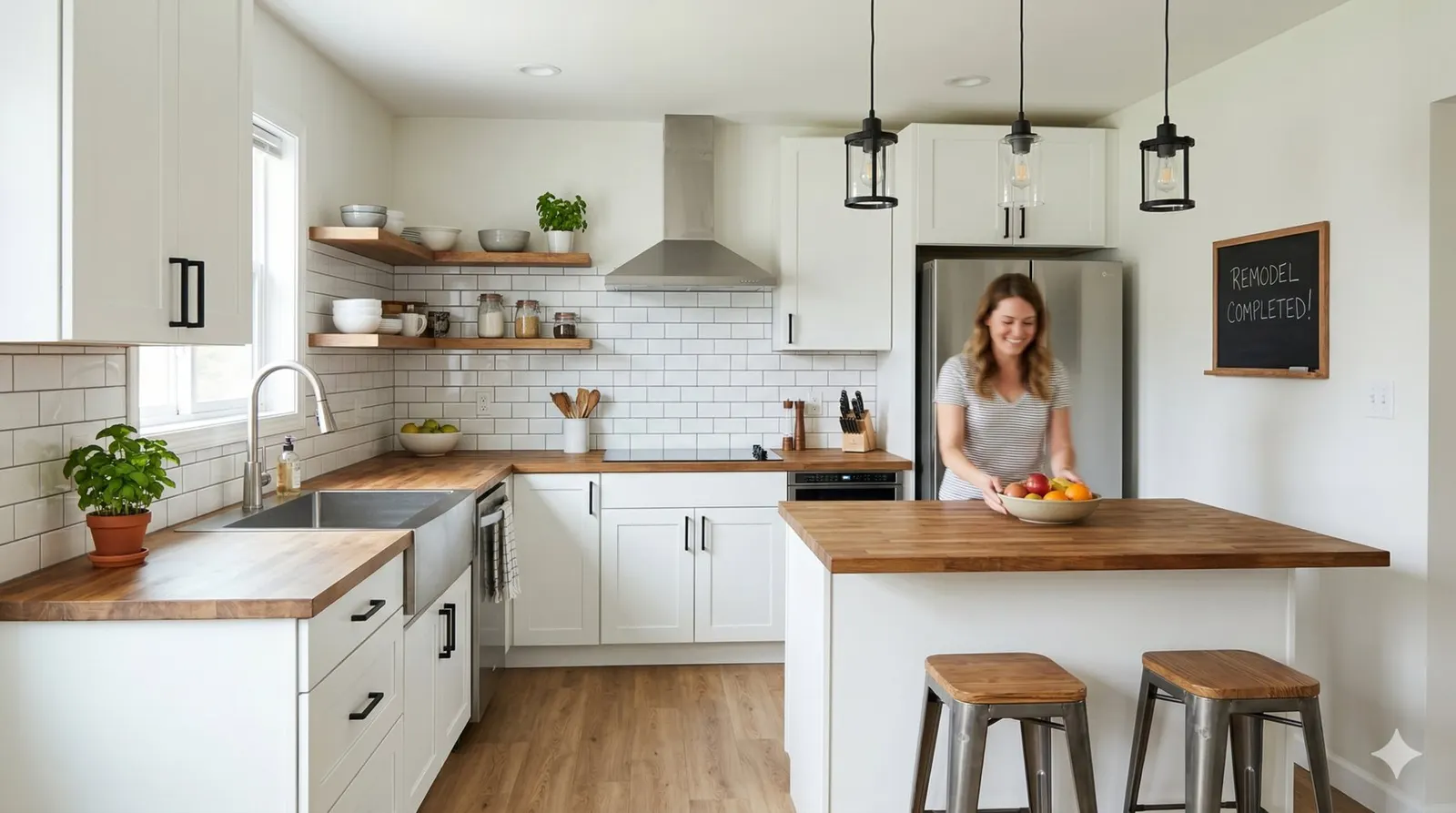
For smaller kitchens, galley layouts maximize efficiency by placing all major elements along two parallel walls, creating clear pathways while maintaining easy access to everything you need. Consider removing upper cabinets on one wall and replacing them with open shelving to create visual openness without sacrificing storage. Installing a rolling cart or portable island provides additional workspace that can be moved when not needed, offering flexibility for different cooking tasks and entertaining scenarios.
Larger kitchens benefit from L-shaped or U-shaped configurations that provide ample counter space and storage while maintaining efficient workflow patterns. These layouts naturally create distinct zones for food preparation, cooking, and cleanup, allowing multiple people to work comfortably without interfering with each other. Consider incorporating a central island or peninsula to provide additional storage, seating, and workspace while defining the kitchen area within an open floor plan.
Vertical space utilization dramatically improves functionality without requiring expensive structural changes. Install ceiling-height cabinets to maximize storage capacity, use wall-mounted magnetic strips for knife storage, and add hooks or rails for frequently used utensils. Pull-out drawers in lower cabinets improve accessibility, while lazy Susans in corner cabinets maximize awkward spaces. These kitchen design ideas transform existing layouts into highly functional spaces that serve your daily needs more effectively while staying within modest budget parameters.
2. Cabinet Refacing vs Replacement
Cabinet refacing emerges as one of the most impactful affordable kitchen remodeling ideas for homeowners seeking dramatic transformation without complete replacement costs. This process involves keeping existing cabinet boxes while updating doors, drawer fronts, and hardware to create an entirely new appearance. Professional refacing typically costs 30-50% less than full replacement while delivering comparable visual impact, making it an attractive option for budget-conscious property owners and landlords managing multiple properties.
The refacing process works best when existing cabinet boxes remain structurally sound and properly positioned for your needs. Quality cabinets from previous decades often feature solid construction that surpasses many modern alternatives, making refacing a smart investment. The process includes applying new veneer to visible cabinet surfaces, installing new doors and drawer fronts, updating hardware, and adding crown molding or other decorative elements to enhance the overall appearance.
DIY cabinet refacing can reduce costs further, though it requires significant time investment and moderate skill levels. Homeowners comfortable with measuring, cutting, and basic carpentry can tackle this project over several weekends. However, professional installation ensures precise measurements, proper alignment, and warranty protection. Many refacing companies offer financing options that make professional services more accessible while ensuring quality results that enhance property value.
Cost comparisons reveal substantial savings potential with refacing projects. Complete cabinet replacement typically ranges from $15,000 to $40,000, while professional refacing costs $7,000 to $20,000 for similar visual impact. DIY refacing can reduce costs to $2,000 to $8,000, depending on material choices and kitchen size. These savings allow budget allocation toward other improvements like appliances or countertops. When combined with updated hardware, lighting, and paint, refaced cabinets create stunning transformations that rival complete renovations while preserving financial resources for other home improvement priorities.
3. Smart Lighting Solutions
Proper lighting transforms kitchen functionality and ambiance while representing one of the most affordable home improvements available to smart homeowners. Well-designed lighting systems combine task, ambient, and accent lighting to create versatile environments suitable for cooking, dining, entertaining, and daily activities. Strategic lighting placement eliminates shadows over work areas, enhances safety during food preparation, and creates welcoming atmospheres that make kitchens more enjoyable spaces for family gatherings.
Under-cabinet LED strips provide excellent task lighting for countertop work areas while consuming minimal energy and generating little heat. These fixtures install easily as DIY projects, connecting to existing electrical systems or operating on battery power for maximum flexibility. Pendant lights over islands or breakfast bars add focused task lighting while serving as decorative elements that enhance overall design aesthetics. Choose fixtures that complement your kitchen style while providing adequate illumination for specific activities.
Recessed lighting offers clean, modern appearances while providing general ambient lighting throughout the space. LED bulbs in recessed fixtures deliver excellent light quality while reducing energy consumption and replacement frequency compared to traditional incandescent options. Dimmer switches add versatility, allowing you to adjust lighting levels for different activities and times of day. This flexibility proves particularly valuable for landlords seeking to create appealing environments for potential tenants.
Energy-efficient lighting solutions provide long-term cost savings that offset initial investment costs. LED bulbs last 15-25 times longer than incandescent alternatives while consuming 75% less energy, resulting in significant utility bill reductions over time. Smart lighting systems allow remote control and programming, enabling energy optimization and enhanced convenience. These cost-effective kitchen solutions demonstrate how thoughtful lighting design enhances both functionality and efficiency while maintaining budget-friendly implementation costs.
4. Energy-Efficient Appliances
Selecting energy-efficient appliances represents a strategic investment in affordable kitchen remodeling ideas that provide immediate functionality improvements and long-term cost savings. Modern appliances bearing ENERGY STAR certification consume significantly less electricity and water than older models, reducing utility bills while delivering superior performance. For landlords managing rental properties, energy-efficient appliances attract environmentally conscious tenants while reducing operational costs that impact profitability.
Focus your appliance budget on items that provide the greatest impact for your investment. Refrigerators account for the largest portion of kitchen energy consumption, making efficient models a priority for cost-conscious homeowners. Look for features like adjustable shelving, adequate storage capacity, and reliable temperature control systems. Energy-efficient dishwashers save both water and electricity while providing convenience that modern families expect. Choose models with multiple wash cycles and quiet operation for enhanced versatility.
Many utility companies and government programs offer rebates and incentives for energy-efficient appliance purchases, effectively reducing your initial investment costs. Research available programs in your area before making purchases, as these incentives can provide substantial savings on qualifying models. Some programs offer instant rebates at the point of sale, while others provide mail-in rebates or tax credits that reduce overall project costs.
Calculate long-term savings when evaluating appliance options, as energy-efficient models often justify higher initial costs through reduced operating expenses. A new ENERGY STAR refrigerator typically saves $300-500 in electricity costs over its lifetime compared to older models. Efficient dishwashers save approximately $40 annually in utility costs while using less water. These savings accumulate significantly over appliance lifespans, making energy efficiency one of the smartest kitchen design ideas for budget-conscious property owners seeking both immediate improvements and ongoing financial benefits.
5. Updated Countertops on a Budget
Countertop replacement dramatically transforms kitchen appearance while remaining achievable within modest budget parameters when you select appropriate materials and installation methods. Several affordable options provide attractive, durable surfaces that enhance both functionality and aesthetics without requiring premium material investments. Smart material selection combined with strategic installation approaches creates stunning results that rival expensive alternatives while preserving financial resources for other improvement priorities.
Laminate countertops have evolved significantly from basic designs of previous decades, now offering sophisticated patterns that convincingly mimic natural stone, wood, and other premium materials. Modern laminate options feature improved durability, stain resistance, and edge treatments that create upscale appearances at fraction of natural material costs. Professional installation typically costs $20-50 per square foot installed, while DIY installation can reduce costs to $10-25 per square foot for materials only.
Butcher block countertops provide warm, natural beauty that complements various design styles while maintaining affordability for budget-conscious homeowners. These surfaces require periodic maintenance including sanding and oiling, but proper care ensures decades of attractive service. Installation costs range from $30-70 per square foot professionally installed, or $20-40 per square foot for DIY projects. Regular maintenance preserves appearance and prevents damage from moisture and daily use.
Tile countertops offer unlimited design possibilities through creative combinations of colors, patterns, and textures. Ceramic and porcelain tiles provide durability and easy maintenance at reasonable costs, typically ranging from $25-60 per square foot installed. Large format tiles minimize grout lines for easier cleaning, while mosaic patterns create custom appearances that reflect personal style preferences. These cost-effective kitchen solutions demonstrate how creative material selection achieves impressive results within reasonable budget constraints while providing surfaces that serve daily needs effectively.
6. Affordable Flooring Choices
Kitchen flooring selection significantly impacts both aesthetics and functionality while offering numerous affordable options that suit various budgets and design preferences. Smart homeowners evaluate durability, maintenance requirements, and installation costs when selecting flooring materials that provide long-term value. The right flooring choice enhances daily comfort while withstanding heavy traffic, spills, and the demanding conditions typical of active kitchen environments.
Luxury vinyl plank (LVP) flooring has emerged as a popular choice for budget kitchen remodel projects due to its combination of affordability, durability, and realistic appearance. High-quality LVP convincingly mimics hardwood, stone, and tile while providing superior water resistance and comfort underfoot. Installation costs range from $3-8 per square foot, including materials and professional installation, making it accessible for most renovation budgets. Many LVP products feature click-lock installation systems that enable DIY installation for additional cost savings.
Ceramic and porcelain tiles offer excellent durability and water resistance at reasonable costs, typically ranging from $4-12 per square foot installed. These materials provide unlimited design possibilities through various sizes, colors, and patterns while maintaining easy cleaning and long-term durability. Large format tiles create seamless appearances with fewer grout lines, while smaller tiles allow creative pattern combinations that personalize your space.
Laminate flooring provides wood-look aesthetics at budget-friendly prices, typically costing $2-6 per square foot installed. Modern laminate products offer improved durability and realistic textures that closely resemble natural hardwood. However, laminate lacks water resistance, making it less suitable for kitchens prone to spills and moisture. Consider these factors when evaluating options for your specific needs and usage patterns.
Professional installation ensures proper subfloor preparation, accurate measurements, and warranty protection, while DIY installation can reduce costs by 30-50% for homeowners with appropriate skills and tools. Research installation requirements thoroughly before attempting DIY projects, as improper installation can void warranties and create long-term problems. These remodeling tips for landlords and homeowners help ensure successful flooring projects that provide lasting satisfaction and value.
7. Backsplash Ideas That Won't Break the Bank
Creative backsplash installation represents one of the most cost-effective kitchen solutions for adding personality and protection to your cooking space. This highly visible design element provides opportunities for creative expression while serving practical purposes including wall protection from cooking splashes and easy cleanup maintenance. Affordable materials and DIY-friendly installation methods make backsplash updates accessible for virtually any renovation budget.
Subway tiles remain popular due to their timeless appeal, versatility, and affordability. Basic white subway tiles cost as little as $1-3 per square foot, while installation adds $5-10 per square foot for professional work. Creative installation patterns like herringbone, vertical, or offset layouts create custom appearances using standard materials. Colored grout adds visual interest without increasing material costs, while different tile orientations create unique design statements.
Peel-and-stick tile options provide DIY-friendly installation that requires no special tools or adhesives. These products have improved significantly in quality and appearance, offering realistic stone, metal, and ceramic looks at $2-8 per square foot. Installation takes minimal time and skill, making them ideal for rental properties or temporary updates. While not as durable as traditional tile, peel-and-stick options provide attractive solutions for budget-conscious projects.
Paint represents the most affordable backsplash option, costing $20-50 for materials to cover typical kitchen areas. Specialty kitchen paints offer easy cleanup and moisture resistance suitable for backsplash applications. Stencils create pattern effects that mimic tile or other materials, while painter's tape enables geometric designs. Semi-gloss or satin finishes provide durability and easy maintenance for daily kitchen use.
Creative DIY approaches using unconventional materials can create stunning focal points at minimal cost. Reclaimed wood, tin ceiling tiles, or even chalkboard paint provide unique alternatives that reflect personal style while maintaining budget-friendly implementation. These affordable kitchen remodeling ideas demonstrate how creativity and strategic material selection achieve impressive results without significant financial investment.
8. Sustainable Options for Your Remodel
Incorporating sustainable practices into your kitchen renovation provides environmental benefits while often reducing long-term costs through improved efficiency and durability. Eco-friendly materials and energy-efficient systems align with growing environmental consciousness while delivering practical advantages that benefit both homeowners and tenants. Many sustainable options prove surprisingly affordable when you consider their longevity and reduced operational costs over time.
Reclaimed and recycled materials offer unique character while reducing environmental impact and material costs. Salvaged wood creates distinctive countertops, shelving, or cabinet faces with rich patina that new materials cannot replicate. Recycled glass countertops provide stunning appearances while diverting waste from landfills. These materials often cost less than premium new alternatives while delivering superior visual impact and environmental responsibility.
Low-VOC (Volatile Organic Compound) paints, finishes, and adhesives improve indoor air quality while protecting family health. These products cost slightly more than conventional alternatives but provide safer environments, particularly important for households with children, elderly residents, or individuals with respiratory sensitivities. Many low-VOC products now offer performance characteristics equal to traditional formulations without compromising durability or appearance.
Water-efficient fixtures reduce consumption while maintaining functionality, providing ongoing utility savings that offset initial investment costs. Low-flow faucets and efficient dishwashers significantly reduce water usage without sacrificing performance. These improvements particularly benefit landlords managing utility costs while demonstrating environmental responsibility to environmentally conscious tenants.
Energy-efficient lighting, appliances, and insulation provide immediate comfort improvements while reducing ongoing operational costs. LED lighting consumes 75% less energy than incandescent bulbs while lasting significantly longer. Proper insulation around windows and exterior walls improves temperature control and reduces heating/cooling costs. These cost-effective kitchen solutions demonstrate how environmental responsibility and financial prudence align to create smart improvement strategies that benefit everyone involved while supporting broader sustainability goals.
9. Hiring the Right Professionals
Selecting qualified professionals ensures your kitchen renovation project proceeds smoothly while delivering quality results that enhance property value and daily functionality. Smart contractor selection involves thorough research, careful evaluation of credentials, and clear communication about expectations, timelines, and budget parameters. The right professional relationships provide expertise, efficiency, and peace of mind throughout the renovation process.
Begin contractor evaluation by requesting recommendations from friends, neighbors, and local suppliers who work regularly with renovation professionals. Online review platforms provide additional insights into contractor performance, customer satisfaction, and project quality. Focus on contractors with extensive kitchen renovation experience, proper licensing and insurance, and established local reputations for reliable service and quality workmanship.
Interview multiple contractors to compare approaches, pricing, and communication styles. Ask detailed questions about their experience with similar projects, typical timelines, change order procedures, and warranty policies. Request detailed written estimates that break down labor and material costs, allowing accurate comparison between different proposals. Be wary of estimates that vary dramatically from others, as extremely low bids often indicate corners will be cut, while excessively high bids may not provide proportional value.
Verify credentials thoroughly before making final selections. Confirm licensing status with local authorities, verify insurance coverage with their carrier, and check references from recent customers. Visit completed projects when possible to evaluate work quality firsthand. Professional contractors readily provide this information and appreciate customers who conduct thorough due diligence before making commitments.
Establish clear contracts that specify work scope, materials, timelines, payment schedules, and change order procedures. Avoid contractors who request large upfront payments or pressure you to sign immediately. Reputable professionals understand that significant investments require careful consideration and provide detailed documentation that protects both parties throughout the project. These remodeling tips for landlords and homeowners help ensure successful professional relationships that deliver exceptional results within established budget and timeline parameters.
Conclusion
Implementing these affordable kitchen remodeling ideas enables smart homeowners, landlords, and property managers to transform their spaces without exceeding reasonable budget constraints. Success lies in strategic planning, creative material selection, and focusing on improvements that provide maximum impact for your investment. Whether you choose cabinet refacing, energy-efficient appliances, or creative backsplash solutions, each element contributes to creating functional, attractive kitchens that serve daily needs while enhancing property value.
The key to successful budget kitchen remodel projects involves understanding which improvements provide the greatest return on investment while maintaining financial responsibility. By prioritizing functional layouts, selecting cost-effective materials, and incorporating sustainable practices, you create spaces that benefit both current users and future property value. These kitchen design ideas demonstrate that impressive transformations remain achievable within modest budgets when you apply strategic thinking and creative problem-solving approaches.
Remember that kitchen renovations often involve plumbing considerations, particularly when updating appliances, sinks, or layouts. Professional plumbing expertise ensures proper installation, prevents costly mistakes, and maintains compliance with local building codes. Whether you're implementing comprehensive renovations or focused improvements, having reliable professional support makes the difference between successful projects and costly complications.
Ready to transform your kitchen with confidence? Contact K and K Plumbing Ohio at 330-875-8003 for expert plumbing services that support your renovation goals. Our experienced team provides reliable installation, maintenance, and emergency services that keep your kitchen functioning perfectly throughout your remodeling journey. Visit K and K Plumbing to explore our comprehensive services and discover how professional plumbing support ensures your affordable kitchen remodeling ideas become successful reality.
Have a question about this topic? Contact K & K Plumbing or call 330-875-8003 for a free estimate.