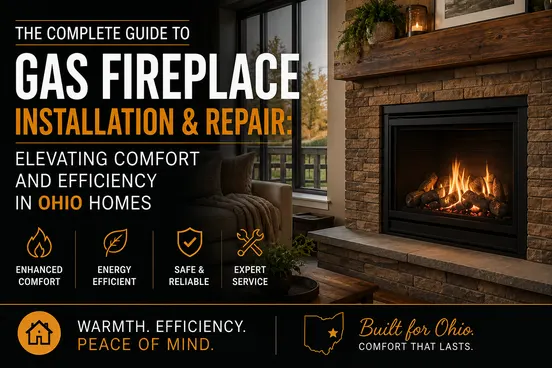
When the biting chill of an Ohio winter settles across Northeast Ohio, there is nothing quite like the comforting, radiant glow of a fireplace to transform your living space into a warm sanctuary. While traditional wood-burning fireplaces have a nostalgic charm, they come with substantial drawbacks, including relentless ash cleanups, chimney draft issues, smoke leakage, and poor energy efficiency. It is no surprise that homeowners throughout the region are upgrading to modern gas hearth systems. A professional installation provides the perfect blend of zone-heating efficiency, push-button convenience, and clean indoor air quality. However, because gas fireplaces merge volatile natural gas or propane fuels with high-intensity heat generation, executing these projects requires the precise mechanical touch of a licensed plumbing and gas contractor.
Whether you are considering adding a luxurious new feature to your living room or dealing with a malfunctioning pilot light on an older unit, understanding the mechanical scope of gas hearth systems is vital. The transition toward professional gas fireplace systems requires careful structural planning, ventilation evaluation, and code compliance. Property owners throughout the region can turn to specialized gas fireplace installation & repair services in Stark County, OH to ensure their units operate at peak safety and peak efficiency. Entrusting your home's gas fuel infrastructure to certified experts guarantees a beautiful, warm gathering space without compromising indoor safety or code standing.
This extensive guide will cover everything you need to know about gas fireplace installation, diagnostics, and repairs. We will dissect the main structural types of gas fireplaces, analyze venting configurations, detail step-by-step diagnostic procedures for common operational faults, and look closely at the Ohio fuel gas codes that govern safety. From proper line-sizing calculations to electrical millivolt circuit adjustments, this document serves as the ultimate resource for residential properties across the state. Whether you live in Canton, Akron, or surrounding communities, read on to discover how to keep your home's gas fireplace running safely and flawlessly all year long.
Classifications of Gas Fireplace Systems: Inserts, Log Sets, and Built-Ins
Before diving into the mechanical infrastructure of lines and vents, homeowners must evaluate the three distinct classifications of gas fireplace products available today. Each type serves a specific architectural purpose and carries unique installation variables. The first, and arguably most popular option for historic homes, is the **gas fireplace insert**. A gas insert is a fully sealed, self-contained steel box designed to slide directly into an existing, drafty wood-burning masonry chimney. By retrofitting an old chimney with a sealed gas insert, you instantly turn a major source of heat loss into a highly efficient zone heater, blocking cold air drafts permanently while updating the look of your room.
The second category is the **vented or unvented gas log set**. Gas logs are molded from refractory ceramic or ceramic fibers to realistically mimic the look of real oak, birch, or driftwood logs. These sets sit on top of a specialized burner chassis placed inside an existing fireplace opening. Vented gas log sets require an open fireplace chimney flue because they produce real combustion exhaust that must be safely evacuated out of the home. Conversely, vent-free or unvented log sets are engineered to burn gas cleanly, producing minimal emissions, allowing them to operate with the chimney damper completely closed. Choosing between vented and unvented configurations requires a detailed evaluation of your home’s air-exchange rates and local municipal structural rules.
The third option is a **zero-clearance (ZC) built-in gas fireplace**. Zero-clearance units are fully insulated hearth structures engineered to be framed directly into a standard wood-stud wall lined with regular drywall. This design allows you to add a beautiful fireplace to completely new areas of your home, such as a master bedroom, a modern basement, or a newly constructed home addition. Because the exterior shell of a zero-clearance fireplace remains remarkably cool during operation, it eliminates the need for massive, expensive stone masonry foundations, making it an incredibly versatile and cost-effective architectural upgrade.
Venting Dynamics: Direct Vent vs. B-Vent vs. Vent-Free
The mechanical success and safety of a gas fireplace installation are fundamentally tied to its venting dynamics. Proper exhaust ventilation ensures that dangerous combustion byproducts, including carbon monoxide (CO), water vapor, and nitrogen dioxide, are thoroughly evacuated from your living spaces. The gold standard for modern residential properties is the **direct-vent fireplace system**. A direct-vent setup utilizes a specialized, dual-chamber coaxial pipe system that vents directly through an exterior wall or through the roof. The outer chamber pulls fresh, oxygen-rich combustion air from the outdoors directly into the fireplace's sealed combustion chamber, while the inner pipe pushes all exhaust gases safely outside. Because the indoor living air never mixes with the fireplace's combustion process, direct-vent systems prevent draft issues and preserve pristine indoor air quality.
The second venting option is the traditional **natural draft or B-vent system**. A B-vent fireplace utilizes a single steel flue pipe that extends vertically through the roof line of the home. Unlike direct-vent models, a B-vent unit draws its combustion oxygen from inside the living space of the room and relies on the natural buoyancy of hot exhaust gases to pull the fumes upward out of the building. B-vent units are highly effective but are increasingly less common in modern, tightly sealed, energy-efficient homes. If a home features powerful kitchen exhaust hoods or bathroom fans, it can create a negative pressure environment that can counter the natural draft, potentially pulling exhaust fumes back down into the room—a dangerous phenomenon known as backdrafting.
The third category consists of **vent-free or unvented systems**. These units feature an incredibly sophisticated, high-efficiency burner chassis designed to achieve nearly 99% fuel combustion, turning nearly all the input gas into heat while producing negligible carbon monoxide. While vent-free systems are incredibly energy-efficient because zero heat escapes through a chimney flue, they do introduce significant moisture (water vapor) directly into the home as a byproduct of gas combustion. If operated for prolonged periods in a small, poorly ventilated space, this moisture can condense on cold glass windows, potentially fostering mold or mildew growth. Licensed installers carefully calculate the total cubic feet of a room before installing a vent-free unit to ensure proper oxygen-exchange balances.
The Critical Mechanics of Fuel Line Engineering
A gas fireplace cannot function without a safe, correctly sized supply of fuel. Delivering the proper volume of fuel requires expert plumbing and gas line engineering. When extending a natural gas or liquid propane line to a new fireplace, a technician must perform meticulous water column pressure calculations and total British Thermal Unit (BTU) demand assessments. Every appliance in a home exerts a specific demand on the gas meter; if a new 40,000 BTU fireplace is added to a system without proper line-sizing considerations, it can starve other critical appliances, like your furnace or water heater, of necessary fuel pressure during periods of peak winter demand.
Plumbing professionals carefully map out the gas manifold system, choosing between traditional rigid black iron pipe or modern Corrugated Stainless Steel Tubing (CSST). Black iron pipe is incredibly durable and remains the standard for exposed lines near meters and structural basement basements, but it requires manual thread-cutting and precise on-site fittings. CSST, often recognized by its protective yellow exterior jacket, offers incredible flexibility, allowing plumbers to run long, seamless lines through complex joist bays and wall cavities with fewer connection points, drastically reducing the future potential for gas leaks. Regardless of the material chosen, the entire installation must strictly match the national and state structural laws.
To guarantee long-term safety, every new line must include a dedicated gas shut-off valve located within six feet of the appliance, along with a specialized sediment trap (or drip leg). The sediment trap is a vertical extension of pipe placed just before the fireplace's gas control valve. As gas flows through the system, gravity forces any trace amounts of moisture, pipe scale, or debris to drop down into the trap rather than entering the fireplace's delicate control valve mechanism. Skipping the installation of a drip leg can lead to premature valve clogs and dangerous control blockages down the road. Property owners looking for dependable line additions should ensure they hire verified professionals experienced with natural gas line installation & repair in Stark County.
Step-by-Step Diagnostic Guide for Common Gas Fireplace Repairs
Even the highest quality gas fireplaces will eventually require mechanical attention and repair over years of consistent winter operation. When a fireplace fails to ignite on a freezing Ohio evening, homeowners need a systematic method to diagnose the underlying mechanical fault. The vast majority of gas fireplace service calls trace back to issues within the ignition system, specifically the pilot assembly. The pilot assembly houses three critical components: the gas pilot hood, the thermocouple (or thermopile), and the spark igniter electrode.
If your fireplace's pilot light will not stay lit after you release the control knob, the primary suspect is a malfunctioning or dirty thermocouple. A thermocouple is a small metallic probe that sits directly inside the flame of the pilot light. As the probe heats up, it generates a tiny millivolt electrical current that sends a signal to the main gas valve, telling it that a flame is present and that it is safe to keep the gas line open. Over time, carbon deposits (soot) from the burning gas form an insulating layer on the thermocouple tip, preventing it from reading the flame's true temperature. A technician will carefully clean the probe using fine emery cloth or replace the inexpensive part entirely to restore a steady pilot flame.
For fireplaces that utilize a wall switch or remote control to ignite the main burner while the pilot is lit, the diagnostic focus shifts to the thermopile and the low-voltage wiring loop. A thermopile is essentially a larger version of a thermocouple, consisting of multiple thermocouple wires bundled together to generate a higher millivolt current (typically between 250 and 750 millivolts). This current is powerful enough to open the main gas valve without relying on external house electricity. If the main burner fails to fire up, a technician will use a multimeter to check the millivolt output of the thermopile. If the voltage is strong, they will inspect the wall switch contacts and the connections for loose screws or corroded wires that create resistance in the low-voltage loop, neutralizing the signal before it reaches the valve.
Another frequent operational problem is a lazy, yellow, or heavily sooting burner flame. While a warm yellow flame is desired for aesthetic reasons, an excessively lazy flame accompanied by heavy black soot deposits on the ceramic logs indicates a serious combustion imbalance: a lack of oxygen. This can be caused by blocked air shutter openings, insect nests inside the burner orifices, or improperly positioned ceramic logs that interrupt the planned flow of the gas jets. Technicians perform thorough burner cleaning procedures, using compressed air and specialized brushes to clear out debris, ensuring a clean, efficient, and beautiful blue-to-gold flame matrix that complies with indoor air standards.
The Legal Importance of Code Compliance and Safety Testing
In the state of Ohio, all fuel gas installations are strictly regulated by the Ohio Fuel Gas Code (OFGC) and local municipal building departments. These laws are legally binding guidelines engineered to protect property owners from the catastrophic risks of structure fires and gas asphyxiation. For instance, code dictates precise clearance requirements regarding how close combustible materials (such as wood mantels, wood-framing studs, carpet, or television mounts) can be to the hot glass and exhaust vents of a gas appliance. Violating these clearance standards creates a hidden fire risk that can slowly char structural wood over time until it ignites.
Furthermore, any professional plumbing and gas company must complete mandatory pressure testing whenever a gas line is added or modified. Once the lines are run, the system is disconnected from the main meter and pressurized with compressed air or nitrogen to a specific setting measured by a calibrated pressure gauge. The line must hold this pressure perfectly for a legally specified timeframe with zero drop. Technicians also brush every joint with a high-viscosity bubble leak-detection solution to verify that every connection is completely airtight. Homeowners who try to bypass these steps through uncertified "handyman" work risk major code violations, insurance coverage denials in the event of a loss, and immediate home safety hazards.
Safety testing also includes verifying the function of critical emergency safety mechanisms, such as the Oxygen Depletion Sensor (ODS) found on unvented gas fireplaces. An ODS is a highly sensitive pilot light setup designed to automatically shut off the fireplace's gas supply if the oxygen level inside the living room drops below a safe percentage (typically below 18%). Testing these safety sensors requires specialized training and diagnostic equipment, highlighting why annual professional inspections are a foundational component of responsible home maintenance. Property owners dealing with safety concerns or code issues can quickly access certified code violation repairs in Stark County, OH to ensure their gas lines stand fully compliant and safe.
Comparing Gas Log Sets: Vented vs. Vent-Free Options
For property owners looking to convert an existing wood-burning masonry fireplace without investing in a full insert box, choosing between a vented or vent-free gas log set is the most critical decision. Each option presents distinct advantages and limitations regarding heat delivery and architectural requirements. Vented gas log sets are designed to provide the most realistic fireplace experience possible. Because they vent directly up the existing chimney, they can burn gas at a higher rate, producing large, rolling, natural flames that wrap around the log logs just like real wood. However, vented log sets are primarily decorative; up to 90% of the heat generated by the flame escapes directly up the open chimney flue, making them a poor choice for dedicated zone heating.
Vent-free gas log sets, conversely, operate as highly efficient heating appliances. Because they require the chimney damper to remain completely closed during operation, 99% of the heat produced by the clean-burning gas is reflected directly out into the living space of the room. This makes vent-free logs an incredible choice for lowering winter utility bills by heating focused zones of the house. However, vent-free logs feature smaller, less realistic flames because the burner must maintain a precise oxygen-to-gas ratio to ensure complete combustion. Additionally, because the exhaust remains in the room, they are subject to strict room-size restrictions under the Ohio building codes and are generally prohibited in small bedrooms or confined bathroom spaces.
| Feature Matrix | Vented Gas Log Sets | Vent-Free Gas Log Sets |
|---|---|---|
| Heating Efficiency | Low (approx. 10-15% stays in home) | Extremely High (approx. 99% stays in home) |
| Flame Appearance | Large, realistic, rolling flames | Smaller, controlled flames |
| Damper Position | Must be locked fully open | Must remain fully closed |
| Moisture Generation | Evacuated up the chimney flue | Released directly into the room air |
The Value of Proactive Plumbing & Gas Maintenance Packages
The absolute best way to avoid expensive emergency repair calls during a historic winter freeze is to invest in proactive annual maintenance. Gas fireplaces are surprisingly complex machines that experience subtle mechanical drift over months of operation. Dust, pet dander, and household lint are constantly pulled into the appliance's air shutter by the natural convection currents generated by the burner, forming small clogs inside the main pilot orifice and burner ports over time.
A professional annual maintenance package includes a comprehensive, multi-point tune-up. A certified technician will completely remove the ceramic log log sets and clean them using specialized brushes, vacuum out the entire burner chassis cavity, clean the pilot flame hood, and clear the main orifices of obstructions. They will also use specialized glass cleaners to remove the hazy white film of sulfur and silicone deposits that build up on the inside of the ceramic glass window, preserving a crystal-clear view of the fire. Property owners throughout the wider Akron area can secure peace of mind by partnering with recognized experts providing plumbing & gas maintenance services in Akron, Summit County, Ohio.
Beyond basic cleaning, proactive maintenance involves electronic safety logging. The technician will measure the precise gas delivery pressure coming into the valve using a digital manometer, verify that the millivolt output of the thermopile is well within safe operating margins, and use an electronic combustible gas detector to sniff every line connection for microscopic leaks. This rigorous evaluation catches small component failures—like a weakening valve solenoid or a cracking pilot hose—long before they escalate into complete system breakdowns or dangerous household situations, ensuring your family stays perfectly warm and secure all winter long.
Conclusion: Trusting the Experts for Seamless Warmth
Upgrading your home with a beautiful gas fireplace is a highly strategic investment that significantly boosts your property value, transforms your interior design, and provides ultra-efficient zone heating across cold Ohio winters. From the streamlined convenience of direct-vent zero-clearance installations to the careful preservation of old chimneys through custom inserts, the modern hearth landscape offers exceptional options for every residential layout. However, because gas hearth operation involves managing flammable gas pressures and complex exhaust dynamics, achieving long-term safety requires letting licensed professionals handle the project details.
By understanding the intricate mechanics of your fireplace’s thermocouple circuit, mastering proper outrigger line expansion layouts, and committing to proactive annual inspections, you protect both your structural investment and your family’s well-being. When dealing with complex gas infrastructure additions, choosing a verified regional expert guarantees that your system stands fully compliant with the latest municipal laws and engineering tolerances, leaving you free to simply kick back, press a button, and enjoy the cozy warmth of a beautiful hearth.
Are you ready to elevate your home's comfort, update your living spaces, or repair a temperamental pilot assembly before the winter cold hits? K and K Plumbing provides the premier choice for professional, safe, and fully code-compliant gas fireplace installation and repair services throughout Northeast Ohio. Our team of fully licensed gas line plumbing experts specializes in custom insert fits, precise line additions, and advanced low-voltage diagnostics to keep your hearth operating flawlessly. Don't leave your indoor safety to chance—partner with a highly trusted regional contractor. Visit K and K Plumbing today or contact our dedicated service desk to book your specialized hearth consultation.
Have a question about this topic? Contact K & K Plumbing or call 330-875-8003 for a free estimate.