The Ultimate Guide to the Best Plumbing Maintenance Services
Plumbing maintenance encompasses the proactive care and regular inspection of your home's water supply, drainage systems, and plumbing fixtures to ensure…
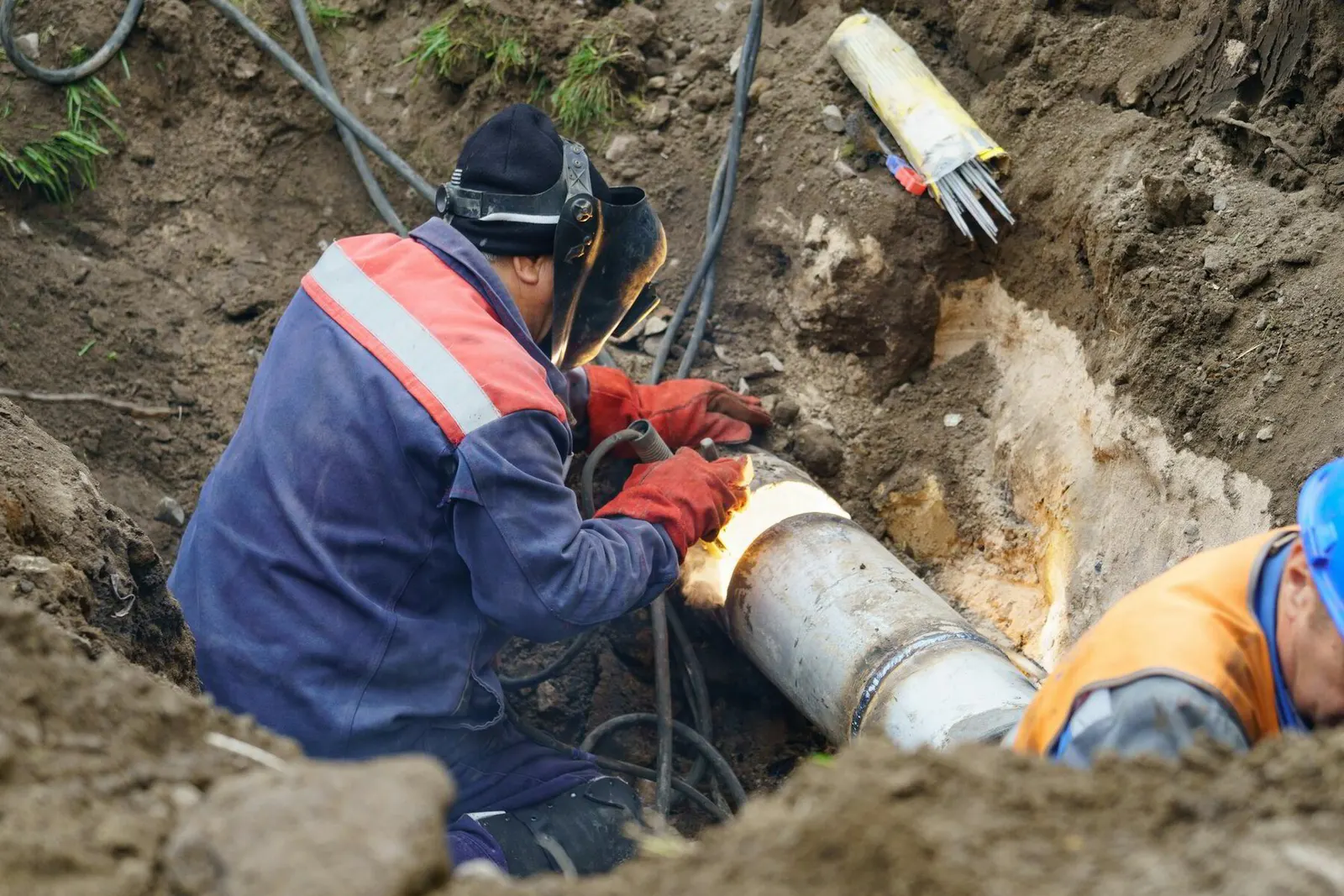
The pipe that carries water from the curb stop, meter pit or well into your building is easy to forget until it fails. When it does, you can lose pressure, see a soggy yard or face a sudden jump in your water bill. K & K Plumbing handles water main repair and service line replacement for homes and businesses throughout Stark County and neighboring counties, starting with a free estimate.
Utilities use the term water main for the large pipes under the street. On a home or business, people usually mean the water service line: the private pipe that runs underground from the utility's curb stop or meter to the main shutoff inside the building. On a property served by a private well, it is the buried line from the well head or pitless adapter to the pressure tank.
In most Ohio communities the utility owns the street main and the connection up to the curb stop, and the property owner is responsible for everything on the house side. The exact dividing point varies by water system, so we confirm it with your utility before work starts. That avoids paying for repairs the city or district should handle, and it keeps the right people involved when a shutoff at the curb is needed.
Service line failures rarely announce themselves with a gusher. More often the clues build slowly. If you notice several of the following, it is worth having the line checked before a small leak turns into a washout under a driveway or a flooded basement wall.
A simple first test is to shut off every fixture and appliance, then watch the meter. If the dial or leak indicator keeps moving with nothing running, water is escaping somewhere. Closing the main shutoff inside the house and watching again helps tell whether the leak is underground or inside the building. Our leak detection and repair service covers the indoor side if the problem turns out to be there.
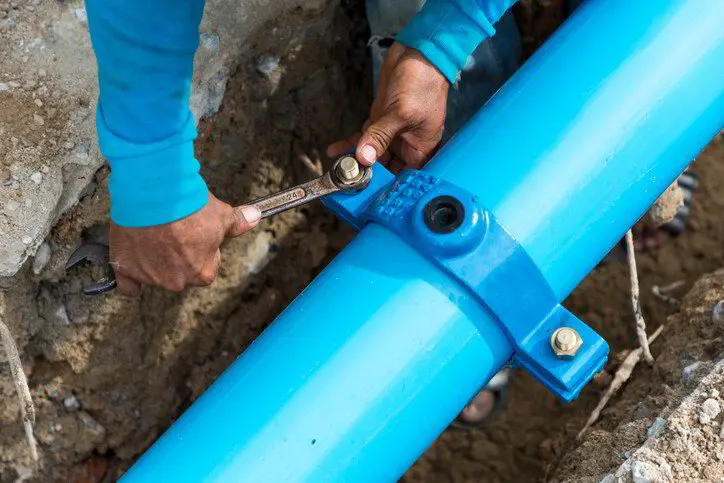
Most homes in the area have a three-quarter-inch or one-inch service line. Older houses may still have galvanized steel or even lead, while homes from the middle of the last century often have copper, and newer construction usually uses polyethylene or PEX tubing made for burial. Many utilities are now inventorying service line materials, and if yours flagged your address as unknown or possibly lead, we can verify what is actually in the ground.
Commercial buildings, churches, schools and multi-unit properties tend to have larger lines, and some have fire service connections or backflow assemblies that must stay in working order. Downtime matters more there, so we plan shutoffs with the owner or property manager, stage materials ahead of time and restore water as quickly as the repair allows. For both settings, a failing service line is a good time to check the main shutoff valve, the pressure reducing valve if there is one, and the first section of indoor piping.
Every job follows the same three steps we use for all of our work: you connect with us for a free estimate, you approve the project specifications, and the work is completed and finished with a quality inspection. Within that, a service line job usually goes like this.
We trace the line's route between the curb stop or well and the building, and narrow down the leak location using pressure checks, listening and the visible clues on site. Before any digging, utilities are marked through Ohio's 811 call-before-you-dig system so gas, electric and communication lines are avoided.
A single break on a line that is otherwise sound can often be excavated and repaired in one spot. Old galvanized pipe, lead, or a line with repeated failures usually calls for replacement, because fixing one hole on a corroded pipe tends to move the next leak a few feet down the line. We explain what we found and give you the options in writing.
New pipe is bedded and buried below frost depth, connected at both ends, pressure tested and flushed before the trench is closed. We backfill and leave the work area as neat as we found it, and we let you know about any inspection your water system requires.
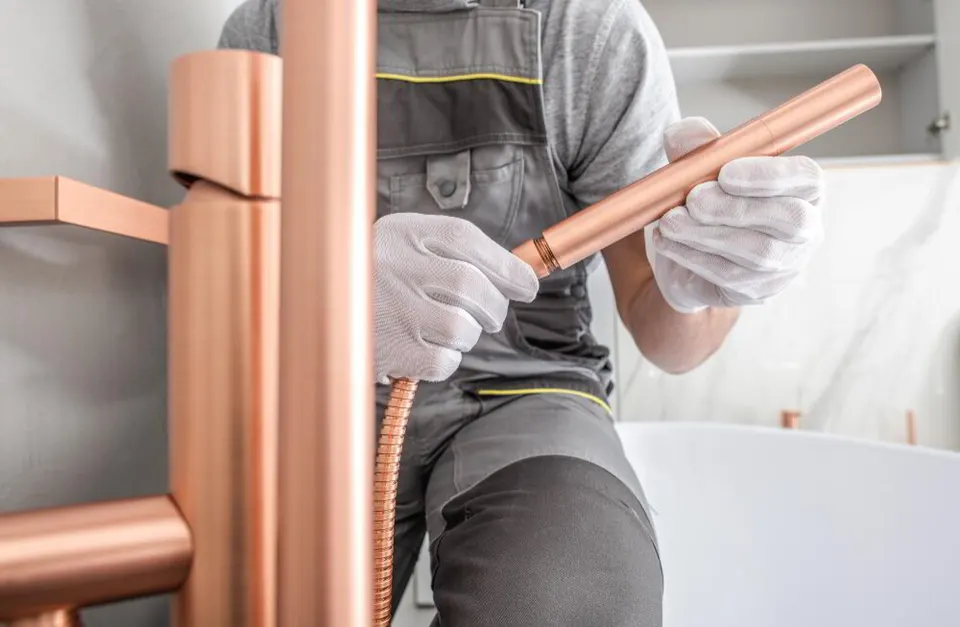
For new service lines, the common choices are type K copper and polyethylene or PEX tubing made for underground water service. Copper is durable and has a long track record. Polyethylene and PEX handle ground movement and freezing better and come in long coils with fewer joints. Your utility may have a preference for the material used at the curb connection, and we follow it.
Depth matters in northeast Ohio, where freeze-thaw winters push frost several feet into the soil. Water lines need to sit below the local frost line, which is typically around three to four feet in this region. Shallow lines are a common cause of winter freeze-ups, especially where a line passes under a driveway that gets plowed bare.
Open trenching is still the most common method, but on some properties a line can be pulled or bored under a driveway, patio or mature landscaping to limit surface damage. Whether that works depends on soil, distance and what else is buried nearby. If water has already reached the basement, our restoration services help with cleanup and damage inspections, and our team can assist with insurance paperwork.
Before we arrive, locate your main shutoff and make sure people can reach it, clear vehicles off the line's path if you know where it runs, and let us know about sprinkler systems, invisible pet fences or buried lighting in the yard. Those are not marked by the 811 system.
Afterward, a service line needs little attention. Exercise the main shutoff once or twice a year so it does not seize, keep an eye on the water bill, and avoid planting trees directly over the line. If your home's interior pipes are as old as the service line, our repiping services can be planned at the same time. Members of our Residential Plumbing Maintenance Agreement get an annual inspection that includes a look at the main shutoff and visible supply piping.
Local pages for the communities we serve most often.
Integrity is the cornerstone of K & K Plumbing. We keep our promises, and these are the commitments we make on every job:

To stay on top of your project from start to finish, ensuring complete satisfaction.

To set and meet all deadlines for the duration of the entire project.

To protect and prepare your home before and during all work.

To protect and prepare your home after every plumbing project.

To accurately price your job so your project is free from hidden costs.
 Estimate
Reach out and we respond promptly. We listen to what you need, assess your plumbing, and walk you through your options so the estimate is accurate and fair.
 Specifications
Every job is planned around your home’s layout and condition, your goals and your budget. Nothing starts until you’ve approved the plan.
 Work + inspection
Our plumbers work efficiently and carefully, then inspect the finished job so you get a reliable, durable result.
In most Stark County water systems the property owner is responsible for the line from the curb stop to the house, and the utility handles the street side. The dividing point can vary, so we check with your utility before quoting the work.
Turn off all water use and watch the meter. If it moves, close the main shutoff inside the house. If the meter keeps moving with the inside valve closed, the leak is most likely on the buried line between the meter and the house.
A single break on a newer copper or plastic line is often worth repairing. Galvanized, lead or repeatedly leaking lines are usually better replaced, since the rest of the pipe is in similar condition.
Sometimes. Depending on soil, length and other buried utilities, a new line can be pulled or bored under driveways and landscaping. We let you know during the estimate whether that is practical on your property.
Yes. We repair and replace buried lines between the well and the house. Our well service and repair team handles pumps, pressure tanks and controls on the same system.
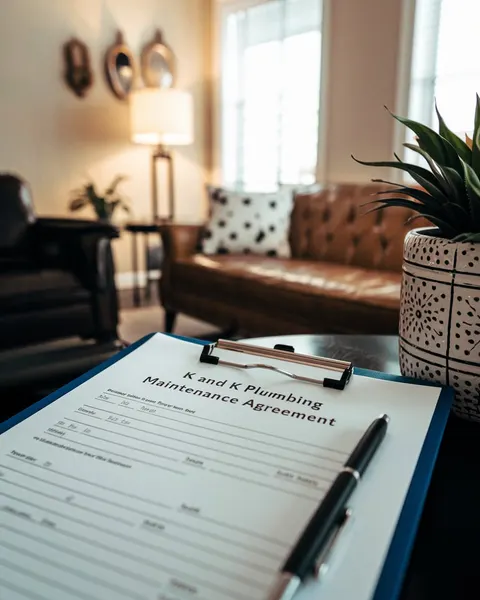
An affordable way to keep your plumbing in top shape, cut down on surprise repairs and extend the life of your equipment.
Plumbing maintenance encompasses the proactive care and regular inspection of your home's water supply, drainage systems, and plumbing fixtures to ensure…
When it comes to maintaining your property, few systems are as critical—or as overlooked—as your plumbing. Whether you're a homeowner protecting your…
Leaky pipes are among the most common plumbing issues homeowners face, and addressing them promptly is crucial for protecting your property and…
Tell us what's going on and we'll get back to you to schedule a time. Free estimates and consultations.
Need help right now? Call 330-875-8003

We prioritize your satisfaction by delivering quality plumbing solutions tailored to your needs, carried out with precision, professionalism and dedication to excellence.
Start Your Free Quote Call 330-875-8003