
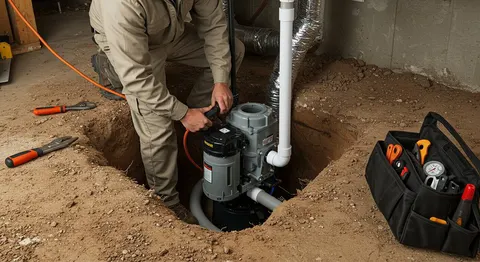
Essential Sump Pump Installation Tips for Homeowners and Property Managers
A sump pump serves as your property's first line of defense against basement flooding and water damage. This mechanical device sits in a specially…
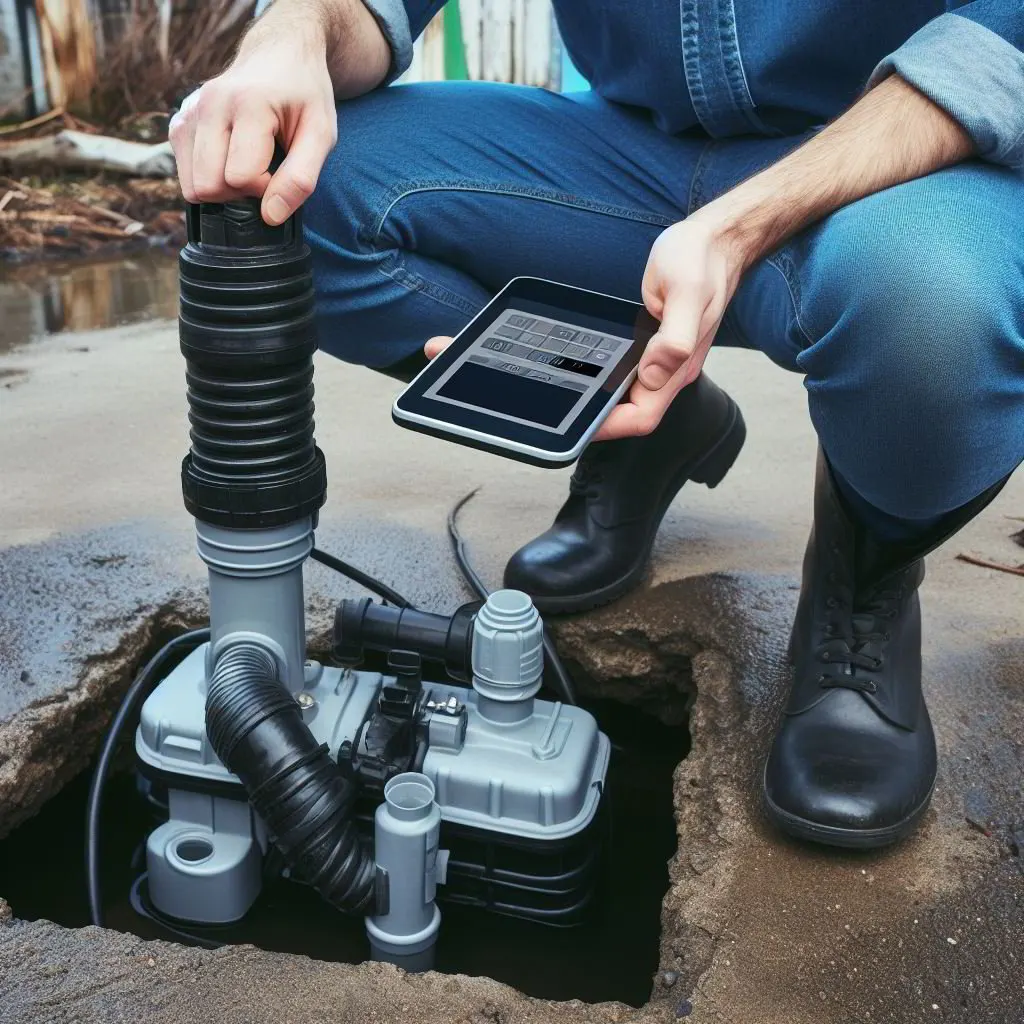
Northeast Ohio basements take on water from snowmelt, spring rain and saturated clay soil, and the sump pump is what stands between that groundwater and your floor. K & K Plumbing installs, replaces and repairs sump pumps, pits, check valves and backup systems for homes and businesses throughout Stark County and neighboring counties, working from our shop in East Canton.
A sump system is more than the motor in the hole. Footing drains or interior drain tile collect groundwater around the foundation and route it to a pit. A float switch starts the pump when the water rises, the pump pushes that water up through a discharge pipe, and a check valve keeps it from falling back once the pump shuts off. If any one of those parts fails, the whole system fails, so we look at all of them on every call.
Our work falls into a few broad categories, and most visits involve more than one of them.
Sump pumps tend to fail at the worst possible moment: during a heavy storm, when the pump is working hardest and the power is most likely to flicker. Catching trouble on a dry day is far cheaper than finding it on a wet one. Walk down and look at the pit every month or so, especially in late winter and spring.
Call us for a look if you notice any of the following. None of them means the pump is finished, but each one means something in the system is not doing its job.
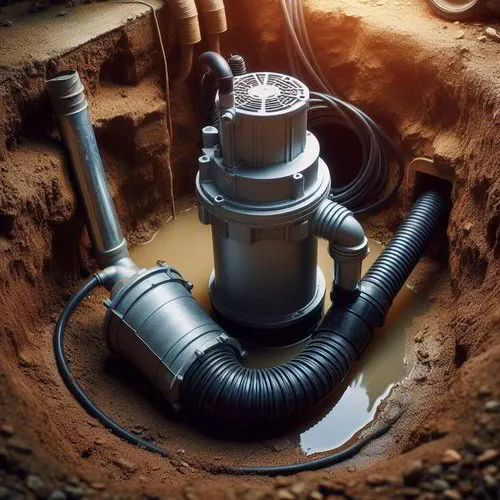
Homes and commercial buildings ask different things of a sump system, and we size and plan each one accordingly.
Whichever kind of property you have, we will explain what we found and why we are recommending a particular setup, then give you a free estimate before any work begins.
For most houses the priorities are reliability, a backup plan for power outages, and quiet operation if the basement is finished. A single quality submersible pump with a battery backup covers the majority of homes. Houses with a high water table, a large footprint or a finished lower level may justify a second primary pump in the same pit or a second pit on the other side of the basement.
Commercial basements, elevator pits, mechanical rooms and loading-dock drains can see much larger water volumes, and a failure may mean damaged inventory or tenants without use of their space. These jobs often call for duplex pump setups that alternate between two pumps, control panels with alarms, and larger discharge piping. We also coordinate with property managers on access and scheduling so work causes as little disruption as possible.
Every job follows the same three steps. First, you reach out for a free estimate and we come look at the pit, the drain tile, the discharge route and the electrical supply. Second, we go over our findings and you approve the specifications: pump type and size, backup choice, pipe material and where the water will go. Third, we complete the work and do a quality inspection, which for a sump system means filling the pit with water and watching the pump start, empty the pit, shut off cleanly and hold with the check valve closed.
On a new pit installation we protect the floor and furnishings, contain the dust from cutting concrete, and leave the area clean. Our plumbers are licensed, insured and bonded, and we treat your home the way an invited guest would.
There is no single best sump pump. The right choice depends on how much water your pit sees, how far up and out the water has to travel, and how much protection you want when the power goes out.
We will recommend what fits your basement and your budget, not the biggest unit on the shelf. An oversized pump can short cycle and wear itself out early, while an undersized one can fall behind in a heavy storm.
Submersible pumps sit at the bottom of the pit, run quieter and handle more water, which makes them the standard choice for most homes. Pedestal pumps keep the motor above the pit on a column, which makes them easier to service and suits narrow or shallow pits. Cast iron housings shed heat better and generally outlast thermoplastic ones in pits that run often.
A battery backup pump sits beside the primary and takes over when the power fails or the main pump quits. Water-powered backups use municipal water pressure instead of a battery and keep running as long as the city supply holds, though they do not work on private wells. A simple high-water alarm is the minimum we suggest for any basement.
Vertical and tethered floats each have their place, and electronic switches avoid the mechanical hang-ups that cause many failures. We use quality check valves, and quieter spring-loaded types are available for finished basements. Discharge lines are usually PVC, routed so they drain away from the foundation and do not freeze at the outlet.
Before we arrive, clear a path to the pit and move stored boxes or furniture back a few feet. If we are adding a new pit, let us know about any finished walls, flooring or buried lines you are aware of. That is about all the preparation most jobs need.
After installation, a little routine care goes a long way. Pour a bucket of water into the pit every few months to confirm the pump starts and stops. Keep the lid on to keep debris out. Make sure downspouts and the discharge outlet send water well away from the house, and check that the outlet is not buried under snow or leaves in winter. Test the backup battery as the manufacturer recommends and replace it when it no longer holds a charge.
Our Residential Plumbing Maintenance Agreement includes an annual inspection where we can look over the sump system along with the rest of your plumbing, plus priority service if something goes wrong. If water has already reached the floor, our plumbing restoration team can help with cleanup and insurance paperwork, and our leak repair service handles water that is coming from pipes rather than the ground.
Local pages for the communities we serve most often.
Integrity is the cornerstone of K & K Plumbing. We keep our promises, and these are the commitments we make on every job:

To stay on top of your project from start to finish, ensuring complete satisfaction.

To set and meet all deadlines for the duration of the entire project.

To protect and prepare your home before and during all work.

To protect and prepare your home after every plumbing project.

To accurately price your job so your project is free from hidden costs.
 Estimate
Reach out and we respond promptly. We listen to what you need, assess your plumbing, and walk you through your options so the estimate is accurate and fair.
 Specifications
Every job is planned around your home’s layout and condition, your goals and your budget. Nothing starts until you’ve approved the plan.
 Work + inspection
Our plumbers work efficiently and carefully, then inspect the finished job so you get a reliable, durable result.
It depends heavily on how often the pump runs and how well it was built. Pumps in pits that run constantly wear out sooner than those that sit idle most of the year. If yours is approaching a decade old, it is worth having it checked before the next wet season.
For most basements, yes. Storms that drive heavy groundwater are also the storms most likely to knock out power. A battery backup gives you protection during an outage and also covers you if the primary pump fails mechanically.
Away from the foundation, onto ground that slopes away from the house or into an approved drainage route. Discharging into a floor drain or sanitary line is generally not allowed and can overload the sewer. We will route the line so the water does not simply soak back around your basement walls.
Yes. We cut and remove a section of the floor, dig the pit, set a liner, connect any interior drain tile, install the pump and discharge line, and patch the concrete. Many older homes in the county were built without one.
Yes. We work on commercial sump pits, duplex pump systems and control panels, and we can tell you whether a pit is handling groundwater or wastewater, since sewage ejectors need different equipment.
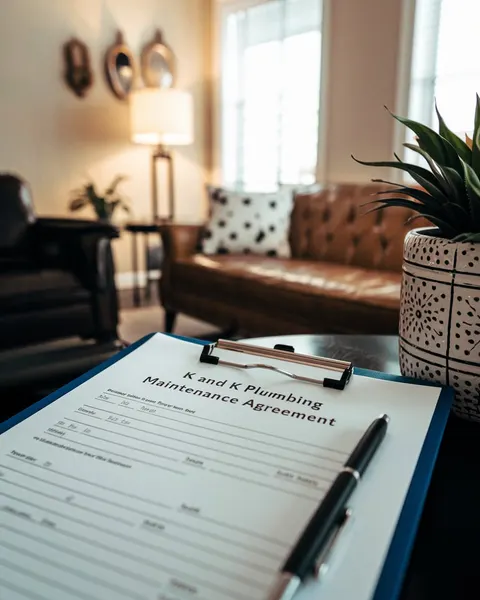
An affordable way to keep your plumbing in top shape, cut down on surprise repairs and extend the life of your equipment.
A sump pump serves as your property's first line of defense against basement flooding and water damage. This mechanical device sits in a specially…
Tell us what's going on and we'll get back to you to schedule a time. Free estimates and consultations.
Need help right now? Call 330-875-8003

We prioritize your satisfaction by delivering quality plumbing solutions tailored to your needs, carried out with precision, professionalism and dedication to excellence.
Start Your Free Quote Call 330-875-8003