
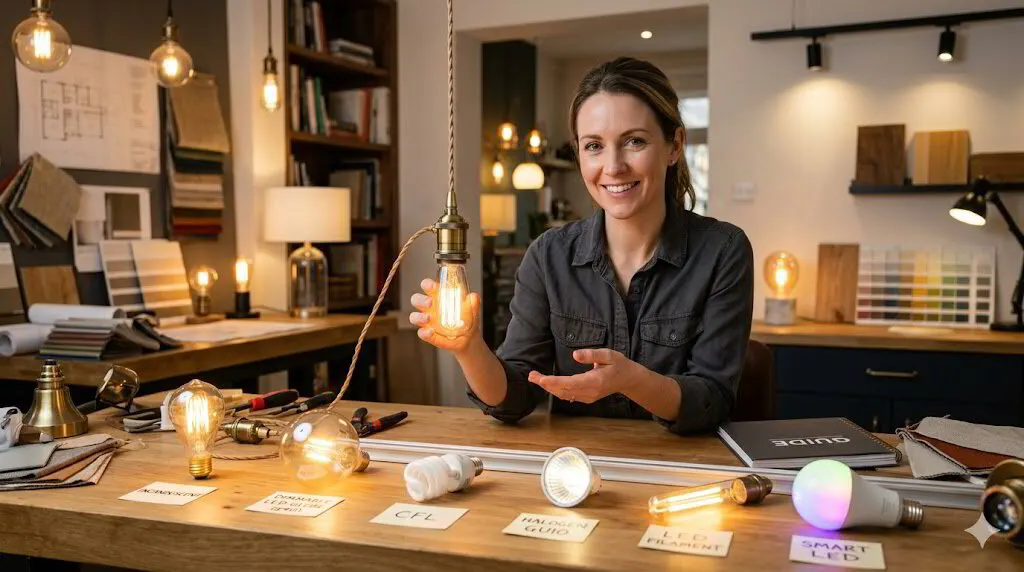
Selecting the right lighting for your home or business can transform any space from ordinary to extraordinary. Whether you're a homeowner looking to enhance your living environment, a landlord maintaining rental properties, or a property manager overseeing multiple facilities, understanding bulb types and their uses is essential for creating effective, efficient lighting solutions.
The lighting industry has evolved dramatically over the past decade, offering an impressive array of options that go far beyond the traditional incandescent bulb. Today's market features energy-efficient alternatives, smart lighting systems, and specialized bulbs designed for specific applications. Each type offers unique benefits, from significant energy savings to enhanced functionality and improved longevity.
Making informed decisions about residential lighting isn't just about aesthetics—it's about optimizing energy consumption, reducing maintenance costs, and creating environments that support productivity and comfort. The wrong bulb choice can lead to inadequate illumination, increased utility bills, and frequent replacements that disrupt daily operations.
This comprehensive guide explores the most popular lighting solutions available today, examining their characteristics, applications, and cost-effectiveness. By understanding the distinctions between LED, CFL, halogen, incandescent, and smart lighting options, you'll be equipped to make strategic decisions that align with your specific needs, budget, and long-term goals for sustainable lighting throughout your property.
Introduction to Bulb Types
Understanding the importance of selecting the right bulb extends far beyond simply replacing a burned-out fixture. The choice you make affects energy consumption, maintenance schedules, lighting quality, and overall operational costs. For property managers and landlords, these decisions multiply across multiple units, making the selection process even more critical for long-term financial planning.
Modern lighting technology offers unprecedented variety in bulb types and their uses, each engineered to address specific requirements and environments. The traditional one-size-fits-all approach has given way to specialized solutions that optimize performance for particular applications, whether you're illuminating a cozy reading nook, a bustling commercial kitchen, or an outdoor security area.
The most common bulb categories include incandescent, LED, compact fluorescent lamps (CFL), halogen, and smart bulbs. Each category encompasses numerous subcategories and variations designed for specific purposes. Incandescent bulbs provide warm, familiar lighting but consume significant energy. LED technology offers exceptional efficiency and longevity. CFLs bridge the gap between traditional and modern solutions, while halogen bulbs deliver bright, focused illumination. Smart lighting systems integrate with home automation for unprecedented control and customization.
Energy efficiency has become a primary consideration for most consumers, driven by both environmental consciousness and rising utility costs. The shift toward sustainable lighting solutions has accelerated adoption of technologies that reduce power consumption while maintaining or improving light quality. Understanding bulb brightness measurements, color temperature options, and lifespan expectations helps ensure your lighting investments deliver maximum value over time while supporting your broader home improvement objectives.
Incandescent Bulbs
Incandescent bulbs represent the traditional lighting technology that dominated households for over a century. These bulbs operate by heating a tungsten filament until it glows, producing the warm, familiar light that many people associate with comfortable home environments. The technology is straightforward and reliable, making incandescent bulbs an easily understood option for basic lighting needs.
The characteristic warm glow of incandescent bulbs creates an inviting atmosphere that works particularly well in residential settings. Their color temperature typically ranges from 2700K to 3000K, producing soft white to warm white light that flatters skin tones and creates cozy environments. This makes them ideal for living rooms, bedrooms, dining areas, and any space where ambiance takes priority over task-oriented illumination.
Common applications for incandescent bulbs include:
- Table lamps and floor lamps in living spaces
- Decorative fixtures where bulb appearance matters
- Dimmer-compatible applications requiring smooth light adjustment
- Short-duration use areas like closets or storage spaces
- Specialty applications requiring specific color rendering
However, incandescent technology comes with significant drawbacks that have led to decreased popularity and regulatory restrictions in many areas. These bulbs convert only about 10% of consumed energy into visible light, with the remaining 90% released as heat. This inefficiency translates to higher electricity bills and increased cooling costs during warm weather, making them less attractive for property managers focused on operational efficiency.
The average lifespan of incandescent bulbs ranges from 750 to 1,000 hours, requiring frequent replacements that increase maintenance costs and labor time. For landlords managing multiple properties, this translates to ongoing expenses and tenant service calls. Additionally, the heat output can be problematic in enclosed fixtures or areas where temperature control is important, potentially creating safety concerns or comfort issues that affect tenant satisfaction and property value.
LED Bulbs
LED (Light Emitting Diode) technology represents the most significant advancement in residential lighting in recent decades. Unlike traditional bulbs that generate light through heat, LEDs produce illumination through electroluminescence, where electrical current passes through semiconductor materials to create photons. This fundamental difference enables exceptional energy efficiency and longevity that makes LED bulbs the preferred choice for most modern applications.
The unique characteristics of LED technology deliver multiple benefits that align perfectly with the needs of property managers, homeowners, and business owners seeking reliable lighting solutions. LEDs consume 75-80% less energy than incandescent bulbs while lasting 25 times longer, dramatically reducing both utility costs and maintenance requirements. This combination of efficiency and durability makes them ideal for high-use areas and hard-to-reach fixtures where frequent bulb changes would be inconvenient or costly.
Key benefits of LED bulbs include:
- Exceptional energy efficiency reducing electricity costs
- Lifespan of 25,000-50,000 hours minimizing replacement frequency
- Instant full brightness without warm-up time
- Cool operation reducing heat-related issues
- Available in multiple color temperatures and brightness levels
- Excellent durability and shock resistance
- Compatible with most dimming systems when specified
LED technology excels in virtually every residential and commercial application, making it the most versatile option among all bulb types and their uses. They perform exceptionally well in kitchens, bathrooms, offices, and outdoor fixtures where consistent, reliable illumination is essential. The cool operation of LEDs makes them particularly suitable for enclosed fixtures, recessed lighting, and areas where heat buildup could be problematic.
Smart lighting integration has further enhanced LED capabilities, enabling features like remote control, scheduling, color changing, and integration with home automation systems. For property managers, this technology offers opportunities to reduce energy consumption, automate lighting schedules, and provide tenants with modern amenities that increase property value. The initial higher cost of LED bulbs is quickly offset by energy savings and reduced maintenance, making them a sound long-term investment for any lighting upgrade project.
CFL Bulbs (Compact Fluorescent Lamps)
Compact Fluorescent Lamps (CFLs) emerged as a bridge technology between traditional incandescent bulbs and modern LED solutions. These bulbs operate by passing an electric current through mercury vapor inside a fluorescent tube, which produces ultraviolet light that excites phosphor coating to create visible illumination. The compact design allows CFLs to fit standard light fixtures while providing significantly better energy efficiency than incandescent alternatives.
CFL technology offers a middle ground for consumers transitioning from incandescent to more efficient lighting solutions. These bulbs typically use 75% less energy than incandescent bulbs and last 8-10 times longer, providing substantial savings on both electricity bills and replacement costs. The spiral or folded tube design enables CFLs to produce equivalent light output to higher-wattage incandescent bulbs while maintaining compatibility with existing fixtures and electrical systems.
Typical use cases for CFLs include:
- General area lighting in living rooms and bedrooms
- Task lighting in home offices and workspaces
- Hallway and stairwell illumination
- Basement and garage applications
- Rental properties requiring cost-effective upgrades
- Areas with moderate usage patterns
The advantages of CFL technology make them attractive for specific applications and budget-conscious projects. They provide good light output across various color temperatures, from warm white (2700K) to daylight (6500K), allowing customization for different environments and preferences. CFLs work well in fixtures that remain on for extended periods, as their efficiency benefits are most pronounced during longer operating cycles that justify the initial warm-up period.
However, CFLs also present several disadvantages that have limited their adoption as LED technology has become more affordable. These bulbs contain small amounts of mercury, requiring special disposal procedures and creating environmental concerns if broken. They also require 1-3 minutes to reach full brightness, making them less suitable for areas requiring instant illumination. Temperature sensitivity affects CFL performance in very cold or hot environments, and frequent on-off cycling can reduce their lifespan significantly. For property managers and landlords, these limitations may outweigh the cost savings, particularly in high-traffic areas or applications requiring reliable, instant lighting for tenant safety and satisfaction.
Halogen Bulbs
Halogen bulbs represent an enhanced version of incandescent technology, incorporating halogen gas (typically iodine or bromine) within the bulb envelope to improve efficiency and extend lifespan. This gas enables the tungsten filament to operate at higher temperatures while recycling evaporated tungsten back onto the filament, resulting in brighter light output and longer operational life compared to standard incandescent bulbs.
The distinguishing characteristics of halogen technology make these bulbs particularly valuable for applications requiring bright, focused illumination with excellent color rendering. Halogen bulbs produce crisp, white light with a color temperature around 3000K, offering superior color accuracy that makes them ideal for task lighting, display illumination, and areas where visual clarity is paramount. Their compact size and high light output enable versatile fixture designs and precise light control.
Effective applications for halogen bulbs include:
- Track lighting and accent lighting systems
- Under-cabinet kitchen lighting
- Bathroom vanity and mirror lighting
- Outdoor security and landscape lighting
- Display cases and artwork illumination
- Desk lamps and reading lights
- Recessed downlights requiring focused beams
Halogen bulbs offer several advantages that make them suitable for specific lighting challenges. They provide instant full brightness without warm-up time, making them reliable for security applications and areas requiring immediate illumination. The excellent color rendering index (CRI) of halogen bulbs accurately represents colors, which is crucial for tasks like food preparation, grooming, or detailed work. Their dimmability works smoothly with standard dimmer switches, and the compact size allows for sleek fixture designs that complement modern interior aesthetics.
Despite these benefits, halogen technology has significant drawbacks that limit its appeal for general lighting applications. These bulbs operate at extremely high temperatures, creating safety concerns in enclosed fixtures and contributing to cooling costs in climate-controlled environments. Their energy consumption, while better than standard incandescent bulbs, remains much higher than LED or CFL alternatives. The typical lifespan of 2,000-4,000 hours requires more frequent replacement than modern alternatives, increasing maintenance costs and labor time for property managers. Additionally, the high operating temperature makes halogen bulbs unsuitable for fixtures near flammable materials or in children's rooms where accidental contact could cause burns. For most residential lighting applications, LED technology now provides superior performance with greater safety and efficiency.
Smart Bulbs
Smart lighting represents the cutting edge of residential and commercial illumination technology, integrating traditional lighting functions with wireless connectivity, advanced controls, and home automation capabilities. These intelligent lighting solutions connect to Wi-Fi networks or specialized protocols like Zigbee and Z-Wave, enabling remote control through smartphone apps, voice assistants, and automated systems that respond to schedules, occupancy, or environmental conditions.
The foundation of smart lighting typically builds upon LED technology, combining energy efficiency with programmable features that transform how we interact with our lighting environments. Smart bulbs can adjust brightness levels, change color temperatures, shift through millions of colors, and integrate with broader home automation ecosystems to create sophisticated lighting scenes that enhance comfort, security, and energy management throughout residential and commercial properties.
Smart lighting enhances home automation through:
- Remote control and monitoring via smartphone applications
- Voice control integration with Alexa, Google Assistant, and Siri
- Automated scheduling for energy savings and security simulation
- Occupancy-based activation and deactivation
- Integration with security systems and environmental sensors
- Customizable lighting scenes for different activities and moods
- Energy monitoring and usage optimization features
The ideal applications for smart bulbs extend across virtually every area of modern properties, making them particularly valuable for tech-savvy homeowners, forward-thinking landlords, and property managers seeking to differentiate their offerings. Smart lighting excels in bedrooms where gradual wake-up sequences can replace harsh alarm clocks, in living areas where entertainment-synchronized lighting enhances media experiences, and in security applications where automated scheduling creates the appearance of occupancy during travel periods.
For property managers and landlords, smart lighting offers opportunities to attract tenants seeking modern amenities while providing practical benefits like remote troubleshooting, energy monitoring, and automated maintenance alerts. The ability to pre-configure lighting settings for new tenants and provide remote support reduces service calls and enhances tenant satisfaction. However, smart bulbs require reliable Wi-Fi networks and may present complexity challenges for less tech-savvy users. The higher initial cost is offset by energy savings and enhanced property value, but implementation requires careful planning to ensure network compatibility and user-friendly operation that aligns with tenant expectations and technical capabilities.
Choosing the Right Bulb for Your Needs
Selecting the optimal lighting solution requires careful consideration of multiple factors that affect both immediate performance and long-term costs. Understanding these key variables enables property managers, homeowners, and business owners to make informed decisions that align with their specific requirements, budget constraints, and operational goals. The decision-making process should evaluate brightness requirements, color temperature preferences, energy efficiency targets, and maintenance considerations.
Critical factors to consider include:
- Brightness requirements: Measured in lumens, not watts, to determine adequate illumination levels
- Color temperature: Ranging from warm (2700K) to daylight (6500K) affecting ambiance and functionality
- Energy efficiency: Comparing actual power consumption and operational costs over bulb lifespan
- Lifespan expectations: Balancing initial cost with replacement frequency and maintenance labor
- Dimming compatibility: Ensuring bulbs work properly with existing dimmer switches
- Fixture compatibility: Confirming size, heat tolerance, and electrical requirements match existing installations
Different settings require tailored approaches to bulb types and their uses for optimal results. Living rooms benefit from warm, dimmable LED bulbs that create comfortable ambiance while providing adequate task lighting when needed. Kitchens require bright, cool-temperature lighting that enhances food preparation safety and cleanliness visibility. Bedrooms work well with warm lighting that promotes relaxation, while home offices need bright, daylight-balanced illumination that reduces eye strain during extended work periods.
Outdoor applications demand weather-resistant LED bulbs that provide reliable security lighting and landscape enhancement. Bathrooms require moisture-resistant options with good color rendering for grooming tasks. For rental properties, LED bulbs offer the best combination of longevity and efficiency, reducing maintenance calls and utility costs while providing reliable performance that satisfies tenant expectations across diverse applications and usage patterns.
Frequently Asked Questions (FAQs) about Bulb Types
Q: How do I determine the right brightness level for different rooms?
A: Brightness is measured in lumens, with general guidelines suggesting 20 lumens per square foot for ambient lighting, 50 lumens per square foot for task areas, and 30 lumens per square foot for accent lighting. Living rooms typically need 1,500-3,000 lumens total, while kitchens require 5,000-10,000 lumens for adequate task lighting.
Q: Can I use LED bulbs in fixtures designed for incandescent bulbs?
A: Most LED bulbs are designed to retrofit existing incandescent fixtures, but check wattage compatibility and ensure enclosed fixture ratings match your application. Some decorative fixtures may require specific LED bulb shapes or sizes for proper appearance and heat dissipation.
Q: Why do some CFL bulbs flicker or take time to reach full brightness?
A: CFLs require warm-up time due to their fluorescent technology and may flicker due to incompatible dimmer switches, cold temperatures, or aging components. Using CFL-compatible dimmers and allowing adequate warm-up time typically resolves these issues.
Q: Are smart bulbs worth the additional cost for rental properties?
A: Smart bulbs can add value to rental properties by attracting tech-savvy tenants and enabling remote management, but consider tenant technical comfort levels and ensure reliable Wi-Fi coverage. The energy monitoring and remote troubleshooting capabilities may offset higher initial costs through reduced maintenance calls.
Q: How do I properly dispose of different bulb types?
A: LED and incandescent bulbs can typically go in regular trash, while CFLs require special disposal at recycling centers due to mercury content. Check local regulations for specific disposal requirements and recycling programs in your area.
Q: What causes LED bulbs to flicker, and how can I fix it?
A: LED flickering often results from incompatible dimmer switches, voltage fluctuations, or poor-quality bulbs. Installing LED-compatible dimmers and choosing high-quality bulbs from reputable manufacturers typically eliminates flickering issues in most residential applications.
Conclusion and Summary of Key Points
Understanding bulb types and their uses empowers you to make informed lighting decisions that enhance your property's functionality, efficiency, and value. LED technology emerges as the clear winner for most applications, offering exceptional energy savings, longevity, and versatility that benefit homeowners, landlords, and property managers alike. While CFLs provide a budget-friendly transition option, and halogen bulbs excel in specific focused lighting applications, the superior performance and declining costs of LED solutions make them the optimal choice for comprehensive lighting upgrades.
Smart lighting represents the future of residential and commercial illumination, combining LED efficiency with intelligent controls that optimize energy consumption and enhance user experience. For property managers seeking competitive advantages, smart lighting systems offer opportunities to attract modern tenants while reducing operational costs through automated management and energy monitoring capabilities.
The investment in quality lighting solutions pays dividends through reduced maintenance, lower utility bills, and improved property appeal. Whether you're upgrading a single fixture or planning comprehensive lighting renovations, choosing the right bulbs ensures long-term satisfaction and optimal return on investment for your home improvement projects.
Ready to upgrade your property's lighting or need expert advice on electrical improvements? Contact K and K Plumbing Ohio at 330-875-8003 for professional consultation on lighting solutions and electrical services. Our experienced team can help you select the perfect lighting options for your specific needs while ensuring safe, code-compliant installations. Visit https://kandkplumbingoh.com/ to learn more about our comprehensive home improvement services and schedule your consultation today.
Have a question about this topic? Contact K & K Plumbing or call 330-875-8003 for a free estimate.