Every residential and commercial property relies heavily on a complex network of pressurized supply lines, intricate drain assemblies, gas infrastructures, and mechanical waste pumps to maintain daily baseline functionality. This foundational grid operates largely out of sight, concealed behind drywall cavities, buried deep under heavy basement concrete, or tracking through dark crawl spaces. Because domestic and commercial water frameworks endure constant thermal cycles, massive hydraulic friction, and structural shifting, they are subjected to relentless mechanical degradation. Over years of steady operation, minor defects inevitably emerge—microscopic stress cracks in metallic water couplings, stubborn sediment blockages inside high-pressure valves, hidden pinhole line failures, or deteriorating fixture gaskets. Addressing these operational vulnerabilities promptly is the difference between simple home upkeep and structural property catastrophes.
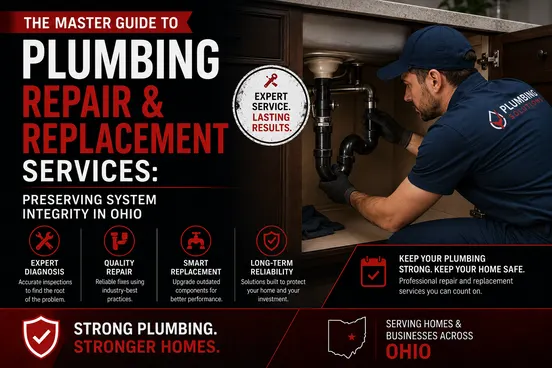
When a plumbing asset begins to exhibit clear signs of operational failure, property owners are immediately confronted with a critical engineering decision: execute a localized mechanical repair or proceed with a comprehensive structural replacement. Navigating this line requires a thorough, objective analysis of the component’s historical condition, the building’s broader layout variables, material age constraints, and overall cost efficiency. Throughout Northeast Ohio, facing these decisions prematurely or relying on substandard handyman shortcuts poses immense legal, safety, and physical risks. Property owners looking to optimize their home distribution systems can turn to specialized repair & replacement services in Stark County, OH to ensure every plumbing mechanism operates at peak safety and peak peak performance guidelines. Entrusting your primary distribution lines to certified local contractors guarantees structural reliability, lowering long-term expenditure and protecting property assets permanently.
This extensive technical guide is designed to demystify the critical physics and structural parameters of professional plumbing repair and replacement tasks. We will analyze the core diagnostic indicators that help dictate whether a component should be serviced or entirely retired, evaluate the specific material dynamics of key residential systems, explore complex main water line interventions, and breakdown the essential state building codes that dictate compliance. From advanced thermal imaging leak tracking to precise hydrostatic line validation, this document operates as your ultimate service resource. Whether you are managing an old historic property in Canton, a high-traffic retail space in Akron, or a modern residential layout, read on to discover how to keep your property's pressurized plumbing architecture working flawlessly across every season of the year.
The Repair vs. Replacement Decision-Making Matrix
For professional plumbing operators and knowledgeable property owners alike, determining the exact threshold where a mechanical repair should be upgraded to a comprehensive material replacement requires referencing a rigorous decision-making matrix. The first variable to calculate is the absolute age of the mechanical system versus its engineered lifecycle expectation. For example, traditional tank-style gas water heaters possess a reliable working lifespan of approximately 8 to 12 years. If an appliance experiences a minor thermocouple failure or a clogged pilot assembly at year four, executing a localized mechanical repair is highly logical and cost-effective. However, if that same unit reaches year eleven and develops a slow weep around its structural lower seams, the steel storage tank has suffered internal rust degradation, making any localized welding repair entirely impossible and making an immediate structural replacement mandatory.
The second primary variable in the matrix involves analyzing the historical recurrence rate of localized plumbing faults. A solitary water line breach behind a bathroom wall can often be resolved by precisely cutting away a small section of damaged pipe and splicing in a high-performance polymer connector. However, if that same structural pipe section suffers repeated pinhole leaks across multiple room bays over a twelve-month period, the home is experiencing systemic material failure—frequently driven by chemical pitting corrosion from hard water or electrical grounding issues. Continuously applying patch-repairs in this scenario is a high-risk financial error; the localized patches simply shift the system pressure down the line, accelerating the next burst. Upgrading the project to a complete space repiping ensures long-term security. Homeowners looking to perform a comprehensive upgrade can secure structural peace of mind by booking a professional repiping service in Stark County, OH.
The third critical factor centers on direct cost-benefit ratios. Industry standards state that if the estimated labor and material cost of an independent mechanical repair approaches or exceeds 50% of the price of an entirely new, energy-efficient replacement unit, upgrading to the new asset is the superior long-term financial path. Modern replacement fixtures and appliances offer significant engineering upgrades—including advanced low-flow water-conservation matrices, superior thermal insulation, and robust corrosion-resistant alloys—that instantly lower monthly utility expenditures, helping recoup the initial capital layout rapidly while boosting the home’s resale market value significantly.
Water Leak Diagnostics: Advanced Locating Techniques
Before any repair or replacement service can be safely executed, the root cause of the system failure must be discovered with absolute certainty. In past decades, locating a hidden pipe leak beneath a structural foundation or behind finished drywall required high-risk, destructive guessing games, with technicians manually tearing out walls and jackhammering floors just to find a dripping coupling. Modern plumbing engineering utilizes highly advanced, completely non-destructive testing (NDT) diagnostic tools to visualize hidden line failures with surgical precision prior to making a single structural cut.
The first primary diagnostic asset is the specialized **thermal imaging infrared camera**. When a hot water line develops a microscopic pinhole leak deep within a structural wall or wood subfloor cavity, the escaping water naturally creates a thermal plume as it saturates the surrounding construction materials. By scanning the walls with an uncooled microbolometer sensor, the technician can immediately visualize the distinct heat signature of the expanding plume through solid wood and drywall. This allows the plumber to mark the exact area of the line failure, minimizing the size of the required wall opening and drastically lowering home restoration costs. Property owners dealing with high water bills or mysterious damp spots can instantly access specialized water leak repair services in Stark County, OH to isolate and neutralize hidden issues.
The second premium diagnostic tool is the **acoustic leak detector**. Under standard domestic municipal pressure settings (typically between 40 and 65 PSI), water escaping through a microscopic pipe crack or structural fracture generates a highly specific, high-frequency physical vibration or "hissing" sound wave. By placing highly sensitive ground microphones and acoustic structural sensors directly over concrete slab floors or drywall framing, technicians can amplify these sound frequencies, filtering out background ambient noise completely. The sound reaches its absolute highest decibel amplitude directly above the point of pipe failure, allowing the plumbing operator to pinpoint slab leaks and deep line splits to within a fraction of an inch, ensuring targeted, highly efficient line repairs.
Water Main Interventions: Trenchless vs. Traditional Excavation
One of the most complex, high-stakes infrastructure tasks a plumbing contractor will undertake is the structural repair or complete replacement of a properties primary main underground water supply line. The water main connects the home directly to the municipal water meter, operating under high static pressures. Over decades of consistent service, these lines can buckle under the immense stress of deep soil freeze-thaw shifts, suffer structural penetration from dense tree roots, or decay from aggressive soil chemistry. When a primary main fails, resulting in a sudden drops in household water pressure or localized backyard flooding, the contractor must evaluate the site's layout to choose between traditional open-cut excavation or modern trenchless pipeline replacement.
Traditional open-cut excavation involves deploying a heavy-duty compact excavator or backhoe to physically dig a continuous trench across the property's landscape from the foundation wall straight to the municipal curb. While this method remains necessary if the existing pipe has completely collapsed or suffered severe structural crushing that blocks all internal line access, it carries massive drawbacks. Traditional excavation completely disrupts mature landscaping, destroys concrete sidewalks, and demands extensive property restoration fees once the underground work is finished. It is a highly invasive process that requires significant time and extensive site-safety monitoring protocols to prevent trench-wall cave-ins.
To minimize property disruption and accelerate project turnaround times, progressive contractors prioritize modern **trenchless pipe replacement** methodologies, most commonly utilizing advanced **pipe bursting** or **directional pipe pulling** technology. For a pipe bursting operation, the technician only digs two small entry and exit pits at either end of the utility run. A high-tensile steel cable is threaded directly through the old, failing line, attached to a heavy-duty hydraulic pulling machine. A specialized, bullet-shaped steel expansion nose (the bursting head) is pulled through the old pipe with immense mechanical force, physically fracturing and breaking the old iron or clay line apart while simultaneously pulling a brand-new, completely seamless line of High-Density Polyethylene (HDPE) pipe directly in behind it. This creates an incredibly durable, joint-free water main that possesses a projected lifecyle exceeding 50 years, completed in a fraction of the time with near-zero landscape destruction. Property owners facing main supply lines drops can book certified crews for water main repair services in Stark County.
Fixture Management: Upgrading Sinks, Toilets, and Drains
Beyond primary main distribution lines, daily household plumbing functionality is heavily dependent on the mechanical health of your visible fixtures and drain lines. Faucets, garbage disposals, and toilets operate as the primary user-interface points for your water utility network. Over years of consistent use, these fixtures suffer constant physical movement and mineral scaling, eventually requiring technical repair or full replacements to preserve home water conservation standing and prevent structural floor decay.
Toilets are prime examples of fixtures where internal mechanical failure can waste thousands of gallons of water every month silently. A running toilet is frequently caused by a warped flush flapper valve, a malfunctioning fill valve, or an improperly adjusted float arm. While replacing these internal rubber and plastic parts is a simple, highly affordable repair, if the ceramic bowl or tank structure itself develops a hairline crack, immediate replacement is the only safe option. Modern replacement toilets utilize highly advanced gravity-flush and dual-flush engineering that consumes a maximum of 1.28 gallons per flush (GPF), representing a massive water savings compared to older, non-compliant models that frequently consumed up to 3.5 to 5.0 GPF. Homeowners looking to lower their utility bills can book professional toilet installation & repair in Stark County, OH to upgrade their bathroom spaces.
Similarly, drain management requires a combination of routine care and precise technical interventions. Slow-draining sinks or showers are early warnings of internal pipeline blockages driven by soap scum, kitchen grease, or hair accumulation. While simple clogs can be cleared utilizing a mechanical sewer snake or hand auger, repetitive blockages inside older cast iron or galvanized drain lines frequently indicate that the pipe's internal walls have grown heavily rusted and rough, continually snagging waste materials. Professionals evaluate these drain channels, using specialized hydro-jetting equipment to blast out scale with high-pressure water or executing complete section replacements utilizing modern, smooth PVC lines to guarantee clear pathways. Properties facing chronic blockages can learn more about specialized restoration care by exploring our guide for drain maintenance & repair services in Stark County, OH.
The Legal Importance of Code Compliance and Safety Testing
In the state of Ohio, all pressurized municipal water plumbing modifications and water fixture replacements are strictly governed by the Ohio Plumbing Code (OPC) and municipal building inspection departments. These laws are legally binding guidelines engineered to safeguard public health, secure the municipal water supply from cross-contamination, and protect residential property structures from fire and structural collapse. For instance, code dictates precise parameters regarding backflow prevention devices. Any connection point between your home's clean culinary water supply and an irrigation system, boiler, or mechanical auxiliary system must feature a certified backflow preventer to legally block hazardous non-potable water from siphoning backward into the civic clean water grid if a main pressure drop occurs.
Furthermore, any professional plumbing company must perform comprehensive safety and pressure testing whenever a supply line is added, modified, or replaced. Once a new pipeline layout is locked into place, the section must be isolated from the meter, filled with water, and pressurized utilizing a calibrated hydraulic testing pump to a setting well above standard household operational limits. The technician monitors a precision pressure test gauge for a legally specified timeframe; if the gauge needle drops even a fraction of a pound, a mechanical connection is compromised, requiring immediate correction. Testing also includes applying specialized non-toxic dye solutions to check fixture joints and using combustion gas sniffers on water heater gas connections to verify absolute structural safety. Homeowners facing local municipal code notices can easily achieve full standing by booking specialized code violation repairs in Stark County, OH.
A Commercial vs. Residential Operational Comparison
While the core physics of water distribution remain uniform across all building types, executing plumbing repairs and replacements in a high-demand commercial property presents a vastly different set of mechanical parameters and operational constraints than performing services in a standard single-family residential layout. Commercial facilities—such as modern hospitals, large restaurants, high-rise office buildings, and retail strip centers—operate high-capacity infrastructure designed to withstand constant, relentless usage profiles from hundreds of individual users simultaneously.
Commercial plumbing architecture relies almost exclusively on heavy-duty, industrial-grade materials, including thick-walled copper lines, robust cast iron soil pipes, and high-pressure flushometer valves rather than standard residential gravity-flush tanks. Because a plumbing system shutdown in a major commercial space can instantly halt business operations, resulting in thousands of dollars in lost revenue and immediate health department code violations, commercial repairs demand exceptional speed and off-hours scheduling, often requiring technicians to work deep into the night or over holidays. Contractors must plan meticulous line-isolation strategies, using auxiliary bypass lines to keep critical parts of the facility operational while repairs occur. Property managers seeking high-capacity upgrades can learn more about customized layouts by viewing our comprehensive overview for plumbing installation services in Stark County, OH.
| Operational Variable | Residential Layout Services | Commercial Facility Interventions |
|---|---|---|
| System Capacity & Flow | Low-to-Medium intermittent usage lines | Exceptionally High, constant demand infrastructure |
| Material Specifications | Standard polymers (PEX-B), light brass fixtures | Industrial copper, heavy cast iron, flushometer valves |
| Business Continuity Impact | Minor inconvenience to a single family unit | Severe (Can spark massive immediate revenue loss) |
| Regulatory Oversight | Standard residential plumbing compliance tests | Strict municipal health and backflow prevention protocols |
Proactive Maintenance: Preventing Catastrophic Failures
The absolute best method to protect your home or business assets from expensive emergency repair bills during a severe winter freeze or sudden system spike is to invest in a routine of proactive plumbing inspections and planned maintenance. High-pressure distribution frameworks are dynamic machines; components experience gradual mechanical wear, material fatigue, and subtle scale accumulation every single day that can quickly lead to complete structural breakdowns if left unaddressed.
A comprehensive professional plumbing maintenance checklist includes a meticulous, top-to-bottom system audit. A certified technician will systematically verify your home’s primary water pressure setting utilizing a calibrated water pressure gauge; if incoming municipal pressure surges past 80 PSI due to a faulty main pressure-reducing valve, it can slowly weaken your plumbing connections, stress your water heater tank, and cause premature faucet failures. Technicians also complete full system flushes for water heaters to clear out dense sediment mounds, test emergency shut-off valves, and visually inspect exposed main lines for early signs of green oxidation or pitting corrosion. Homeowners throughout the wider Canton area can secure total operational peace of mind by partnering with recognized regional contractors providing plumbing maintenance services in Canton, Stark County, Ohio.
Additionally, proactive upkeep includes testing hidden electrical auxiliary pumps, such as your sump pump assembly. Sump pumps are the critical line of defense protecting finished basements from severe groundwater flooding during heavy spring downpours or rapid winter snow melts. The technician will physically pull the pump out of its basin, clear the intake screen of debris, verify the mechanical float switch moves freely, and run a full cycle test to confirm the motor discharges water with maximum velocity. Catching a weakening motor or a brittle line check valve during a scheduled inspection saves property owners thousands of dollars in emergency mitigation fees and preserves the long-term structural value of the home.
Conclusion: Partnering with Licensed Specialists for Long-Term Peace of Mind
Maintaining a pristine, perfectly functioning plumbing network is an essential pillar of responsible property ownership that directly impacts your building's structural integrity, daily operational comfort, and real estate market value. From deploying non-destructive thermal leak tracking to executing advanced trenchless pipe bursting water main installations, modern material and diagnostic innovations offer long-lasting plumbing engineering solutions for every residential and commercial space. However, because domestic water and waste distribution involves managing volatile high pressures and strict building code rules, achieving flawless results requires letting licensed, fully insured plumbing professionals handle the task details.
By understanding the critical variables inside the repair-versus-replacement matrix, committing to proactive annual maintenance inspections, and respecting the legal clearance parameters of the Ohio Plumbing Code, you secure your investment completely. When dealing with complex repiping tasks, urgent utility line breaks, or precision fixture updates, selecting a highly trusted regional contractor ensures your property stands completely protected, leaving you with quiet, seamless, and perfectly flowing water lines all year round.
Are you dealing with an escalating hidden leak, a slow-draining main sewer, or an outdated fixture array that needs immediate technical attention or a full structural upgrade before winter arrives? K and K Plumbing provides the premier choice for professional, safe, and fully code-compliant plumbing repair and replacement services throughout Northeast Ohio. Our team of fully licensed, master technicians specializes in precision trenchless line pulls, custom fixture installations, and advanced thermal leak diagnostics to keep your property's plumbing infrastructure operating flawlessly. Don't leave your building's safety to uncertified shortcuts—partner with a highly trusted regional expert. Visit K and K Plumbing today or contact our dedicated service desk to book your specialized plumbing consultation.
Have a question about this topic? Contact K & K Plumbing or call 330-875-8003 for a free estimate.