
New Plumbing in Canal Fulton, Stage by Stage
Canal Fulton pairs a historic canal-era downtown with newer homes on its outskirts, and people building or expanding there often ask the same thing: what actually happens with the plumbing, and when? This page walks through each stage of a new plumbing installation, from the first trench to the final sign-off, so you know what to expect from us and what to watch for yourself.
Before Any Pipe: Layout and Approval
Work starts with a site visit and a free estimate. We go over the plans, mark fixture locations and figure out how the new system reaches the water supply and the sewer, or a well and septic system on properties outside the city. Once you approve the specifications, including materials, fixture count and any future stub-outs, permits are arranged and we schedule the first stage around your builder.
Stage One: Underground
On a slab, a basement floor or a crawlspace with buried lines, the first plumbing goes in before concrete. We set the building drain and branch lines in the ground at the correct slope and bring stubs up where toilets, tubs, showers and floor drains will be.
The underground system is filled with water or put under air pressure and left to sit, then inspected. Only after it passes can the trench be backfilled and the slab poured. This is the least forgiving stage, because a drain stub in the wrong spot under concrete is expensive to move.
- Confirm tub and shower drain positions against the actual fixture you bought
- Check that the toilet flange center is the right distance from the finished wall
- Make sure any future basement bathroom has its stubs in place now
Stage Two: Rough-In and Top-Out
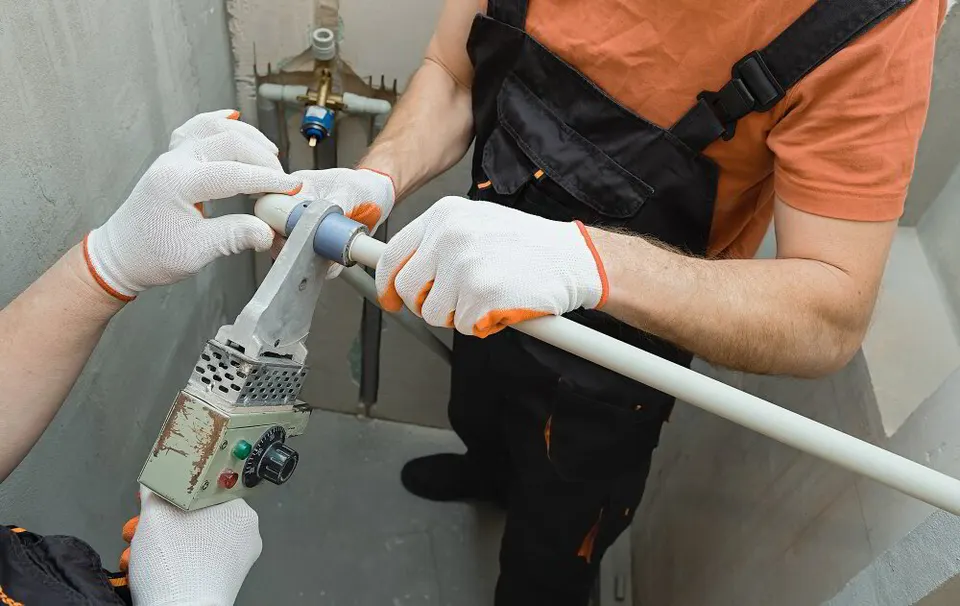
Once the house is framed, roofed and dried in, we run drain, waste and vent piping through walls and floors, carry vents up and through the roof, and install hot and cold supply lines to every fixture. Tub and shower valves are set, and supply stub-outs are capped. Some builders call the vertical portion of this work the top-out.
Drains and vents are tested, supply lines are put under pressure, and the rough-in is inspected with walls open. Electrical and mechanical inspections often happen during the same window, so we coordinate with your builder to keep everything moving.
Your walk-through before insulation
This is the last easy chance to make changes. Walk the house and look for stub-outs at the heights you expect, a vanity drain centered where the cabinet will sit, an ice maker line behind the refrigerator space, and hose bibs where you actually want to use them. Take photos of every open wall. They are useful years later when you hang a cabinet or need to find a pipe.
Stage Three: Trim-Out and Final
After drywall, paint, cabinets and flooring, we return to set toilets, connect sinks and faucets, install shower trim, hook up the water heater and connect appliances such as dishwashers and washers. Every fixture is run, every drain checked for flow and leaks, and the water heater is filled and fired.
The final plumbing inspection confirms the system is complete and working. We follow it with our own quality inspection before we consider the job done.
Additions and Remodels Follow the Same Path
A room addition or major remodel in an older Canal Fulton home goes through the same stages on a smaller scale, with one extra step: tying the new branch into existing drains and supply. If you are planning a builder-led project, our construction plumbing service covers coordination on larger jobs. For fixture swaps that do not need new lines, see plumbing installation services. The Stark County new plumbing page covers materials and planning in more depth.
Why choose K&K Plumbing?
Integrity is the cornerstone of K & K Plumbing. We keep our promises, and these are the commitments we make on every job:

To stay on top of your project from start to finish, ensuring complete satisfaction.

To set and meet all deadlines for the duration of the entire project.

To protect and prepare your home before and during all work.

To protect and prepare your home after every plumbing project.

To accurately price your job so your project is free from hidden costs.
Frequently Asked Questions
What does a plumbing inspector look for at rough-in?
Proper pipe sizing, slope on drains, vents for every fixture, correct fittings and supports, protection where pipes pass through framing, and a passing test on both the drain system and the supply lines.
Can I change a fixture location after the underground inspection?
Moving anything under a finished slab means cutting concrete, so it is best avoided. Changes are much easier during rough-in, while walls are still open.
Why do you need my fixture model numbers early?
Tubs, showers, freestanding fixtures and some toilets have specific rough-in dimensions. Knowing them before underground and rough-in work avoids drains that do not line up.
Do you work outside Canal Fulton as well?
Yes. Canal Fulton is about 18 miles from our East Canton shop, and we serve New Franklin, Green, Massillon, Barberton and Norton as well.

Request a free estimate
Tell us what's going on and we'll get back to you to schedule a time. Free estimates and consultations.
- Licensed, insured & bonded plumbers
- Clean, respectful job sites
- Fair, upfront pricing
- Emergency leak containment
Need help right now? Call 330-875-8003

Enjoy the reliable plumbing your home and family deserve with K and K Plumbing
We prioritize your satisfaction by delivering quality plumbing solutions tailored to your needs, carried out with precision, professionalism and dedication to excellence.
Start Your Free Quote Call 330-875-8003