New Plumbing Systems for Additions, Basements and New Homes in Stark County
When a house gets bigger, its plumbing has to grow with it. K & K Plumbing lays out and installs new supply, drain, waste and vent systems for room additions, finished basements, extensions and ground-up homes across Stark County and neighboring Summit County. We work from the shop in East Canton and plan each job so it moves cleanly through rough-in, inspection and final hookup.
This service is about building plumbing where none existed. That is different from swapping a faucet or replacing a water heater. A new system, or a new branch of an existing one, starts with a layout and ends with water flowing to fixtures that drain and vent the way they should. If you only need a fixture or appliance set in place, our fixture and appliance installation page is the better fit.
On a typical project we handle:
Underground drain lines below a slab or basement floor, set to the correct slope
Rough-in of drain, waste and vent piping inside walls, floors and ceilings
New hot and cold supply lines, branch runs or a manifold, and shutoff valves
Tie-ins to the existing building drain, main stack and water service
Stub-outs capped at each future fixture location, ready for finish work
Pressure and drain testing before walls are closed, then trim-out and final connection
Signs Your Project Needs New Plumbing, Not Just a Fixture
Homeowners often find out mid-project that a remodel has turned into new plumbing work. A few situations make it almost certain:
You are adding a bathroom, kitchen, wet bar or laundry where there is no drain today
An addition, sunroom conversion or second story is going on the house
You plan to finish a basement and want a bathroom or utility sink below grade
A kitchen or bath is moving to a different wall or room
You are building a new home, in-law suite or heated outbuilding
The existing branch lines are too small to feed the fixtures you want to add
Why early planning saves money
Drain lines need slope, and every fixture needs a vent. Those two rules decide where walls, joists and soffits can go. Bringing a plumber in before framing is final avoids notching joists the wrong way, rebuilding a wall to fit a stack, or settling for a toilet in an awkward spot.
Residential and Commercial New Plumbing
Most of our new installation work is residential: additions on older Canton and Massillon homes, lower-level bathrooms in North Canton and Louisville, and complete systems for new houses on rural lots where the water comes from a private well and the waste goes to a septic system. Each one has its own demands. Older houses need careful tie-ins to cast iron or galvanized pipe, while a well-fed home needs room planned for a pressure tank and any water treatment.
On the commercial side, small businesses sometimes need a new restroom, a mop sink, a break room or extra fixtures to suit a change of use. Those jobs involve higher fixture counts and stricter accessibility rules, and they often run on a general contractor's schedule. For full build-outs and larger contractor projects, see our construction plumbing services.
Our Process, From Layout to Final Inspection
Every job follows the same three steps we use company-wide. First you contact us for a free estimate, and we walk the space, look at the existing stack and water service, and talk through where fixtures will go. Second, you approve the project specifications: pipe materials, fixture locations, the scope of tie-ins and the schedule. Third, we do the work and finish with a quality inspection of our own.
Between those steps sit the inspections required by the local building authority. Where they apply, new plumbing generally passes through these stages:
Underground inspection: drains below a slab or floor are tested and checked before concrete is poured or the trench is filled
Rough-in inspection: drain, waste, vent and supply piping is in place and under test, with walls still open
Final inspection: fixtures are set, connected and operating, with no leaks and proper drainage
Testing before anything gets covered
We test drain and vent piping, usually with water or air, and put supply lines under pressure before insulation and drywall go up. A leak found at this stage costs a fitting. A leak found after the tile is set costs a bathroom.
Options and Materials for New Lines
Material choices depend on the house, the water and your budget. We explain the trade-offs during the estimate instead of defaulting to one answer.
Water supply piping
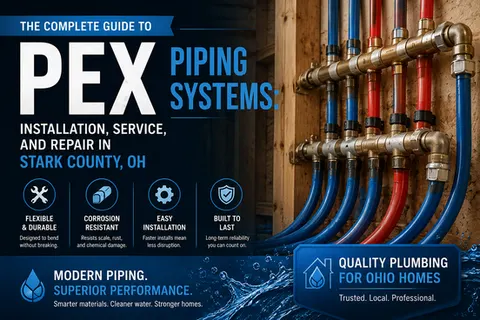
PEX is flexible and needs fewer fittings, handles freeze-thaw winters better than rigid pipe, and works well with a home-run manifold where each fixture has its own line. Copper has a long track record, holds up to heat and is still a good choice for exposed runs and near water heaters. Learn more on our PEX plumbing page.
Drain, waste and vent piping
PVC is the standard for most new residential drains and vents. Cast iron costs more but runs quieter, which some homeowners want for a stack beside a bedroom or living room. Where new work meets old cast iron or galvanized pipe, we use proper transition couplings rather than forcing mismatched materials together.
Below-grade fixtures
A basement bathroom can drain by gravity when the existing sewer line runs deep enough. If not, a sewage ejector pit or an above-floor macerating system lifts waste up to the building drain. We check the depth of your line before recommending either one.
Preparing for the Work and Caring for New Plumbing
Before rough-in, clear a path to the work area and to the main shutoff, and make sure framing is done and inspected if your project requires it. Mark where cabinets, vanities and appliances will go, because stub-out heights depend on them. If you have chosen specific fixtures, have the model numbers or rough-in sheets on hand.
After the job, a few habits keep the new lines in good shape. Know where the new shutoffs are. Insulate any supply line that runs along an exterior wall or through an unheated space, and drain outdoor lines before the first hard freeze. Run water in rarely used fixtures every few weeks so trap seals do not dry out. Many homeowners add our annual maintenance plan so the whole system, old and new, gets checked once a year.
New Plumbing Installations near you
Local pages for the communities we serve most often.
Integrity is the cornerstone of K & K Plumbing. We keep our promises, and these are the commitments we make on every job:
To stay on top of your project from start to finish, ensuring complete satisfaction.
To set and meet all deadlines for the duration of the entire project.
To protect and prepare your home before and during all work.
To protect and prepare your home after every plumbing project.
To accurately price your job so your project is free from hidden costs.
How it works
It should be easy to get the results you want
Estimate
Connect with us to set up an appointment
Reach out and we respond promptly. We listen to what you need, assess your plumbing, and walk you through your options so the estimate is accurate and fair.
Specifications
Approval of project specifications
Every job is planned around your home’s layout and condition, your goals and your budget. Nothing starts until you’ve approved the plan.
Work + inspection
Building your project + quality inspection
Our plumbers work efficiently and carefully, then inspect the finished job so you get a reliable, durable result.
Frequently Asked Questions
What is the difference between rough-in and finish plumbing?
Rough-in is the piping inside walls and floors: drains, vents and supply lines, capped where fixtures will go. Finish, or trim-out, happens after drywall and flooring, when the toilet, sinks, shower valve trim and faucets are installed and connected.
Do I need inspections for new plumbing?
New plumbing work generally needs a permit and inspections from the local building authority, often at the underground, rough-in and final stages. Requirements vary by community, so we confirm what applies to your address during the estimate.
Should new supply lines be PEX or copper?
Both work. PEX is usually faster to install, tolerates freezing better and suits manifold systems. Copper is durable, handles heat well and looks better on exposed runs. We often use both in the same house, each where it fits best.
Can a bathroom go in my basement if the sewer is above the floor?
Yes. If the building drain leaves the house above the basement floor, waste has to be pumped up using a sewage ejector or an above-floor macerating unit. We measure the line before recommending which way to go.
When should I call a plumber on an addition or new build?
Call before framing is finished, ideally while the plans are still being drawn. Drain slope and vent routing affect where walls and joists go, and early input avoids costly rework.
Save more today
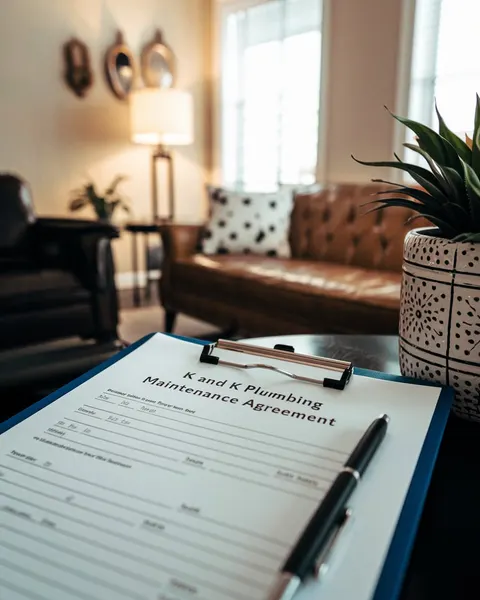
K & K Plumbing Residential Plumbing Maintenance Agreement
An affordable way to keep your plumbing in top shape, cut down on surprise repairs and extend the life of your equipment.
Enjoy the reliable plumbing your home and family deserve with K and K Plumbing
We prioritize your satisfaction by delivering quality plumbing solutions tailored to your needs, carried out with precision, professionalism and dedication to excellence.