
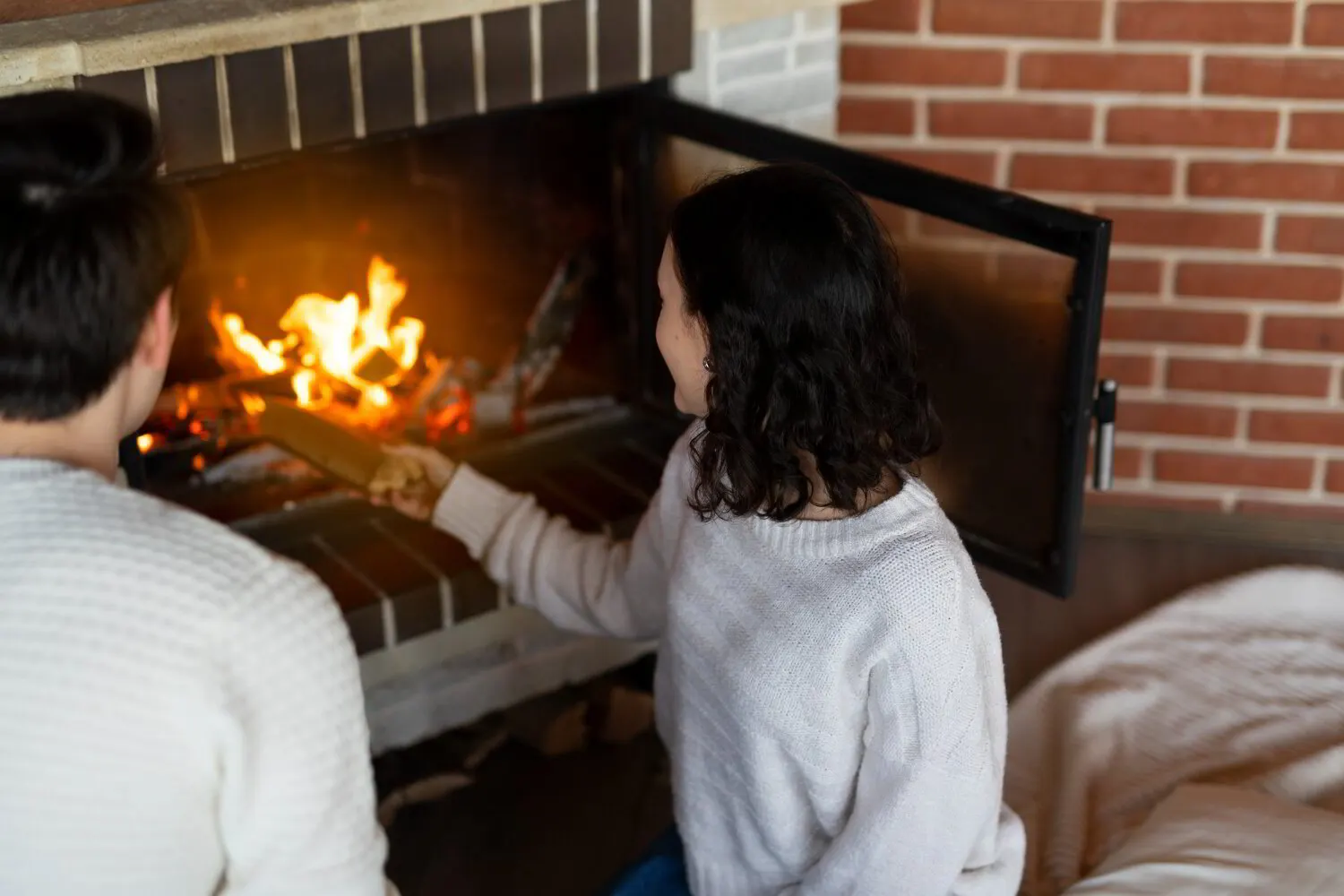
Masonry or Factory-Built? Gas Logs for Green Homes
Green has grown quickly over the past few decades, and many of its newer homes have factory-built wood-burning fireplaces rather than site-built brick ones. Both can often take a gas log set, but the rules are different. K & K Plumbing, about 15 miles from our East Canton shop, starts every Green project by figuring out which kind you have.
Telling the Two Types Apart
A masonry fireplace is built on site from brick, block or stone, with a firebrick-lined firebox and a clay tile or masonry flue. A factory-built fireplace, often called prefab or zero-clearance, is a metal box manufactured as a unit and installed into a wood-framed chase, with a metal chimney pipe running up through the house.
Even when a factory-built unit has brick-pattern refractory panels inside and stone on the face, the clues are usually easy to spot once you know what to look for.
- Metal visible at the top edge of the opening or around the damper
- Thin refractory panels inside rather than individual firebricks
- A metal chimney cap and round or square metal flue on the roof
- A rating plate, often behind a grille below the opening or on the side of the firebox
- A chimney that runs through a framed chase rather than solid masonry
Gas Logs in a Factory-Built Fireplace
A factory-built fireplace is tested and listed as a system. Whether it can accept a gas log set, and which kind, is decided by the fireplace manufacturer, not by the log maker. The rating plate and installation manual say whether decorative gas appliances are allowed, whether vent-free logs are permitted and whether a knockout is provided for the gas line.
Many prefab units allow vented decorative logs installed per the manual. Fewer allow vent-free logs. Some do not allow gas at all. We read the plate, look up the manual if needed and only install what the listing allows. If the plate is missing or unreadable, we treat the fireplace cautiously and talk through alternatives.
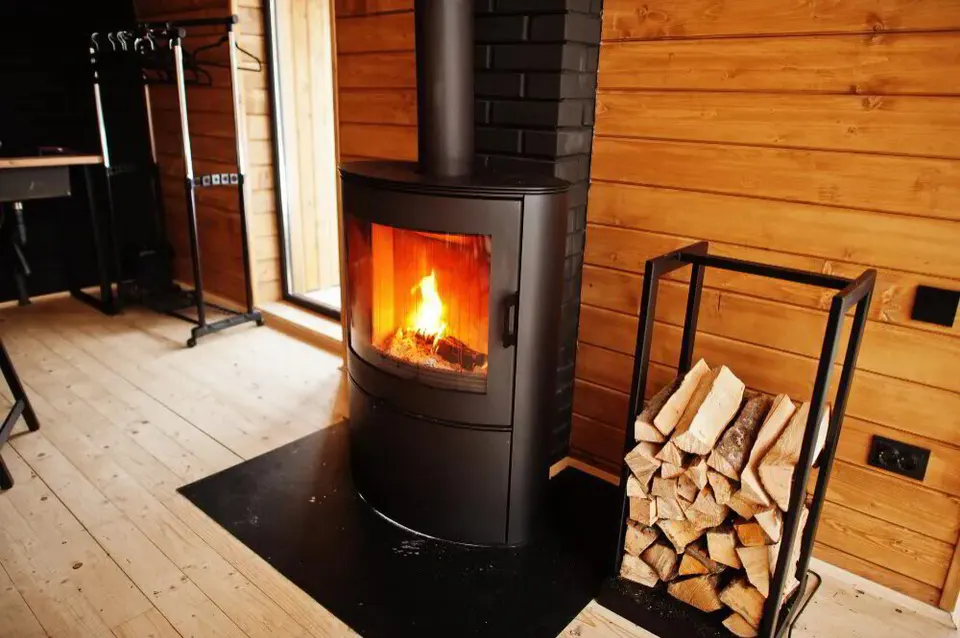
Bringing Gas Into a Metal Firebox
Factory-built units usually have a designated gas line knockout on the side or bottom of the firebox. The line must enter there, through the knockout, and the opening has to be sealed with the material the manufacturer specifies. Cutting a new hole in a metal firebox can compromise its listing and the clearances to framing around it.
Green's newer homes often have the fireplace on an exterior wall or in a corner, sometimes above a finished basement. We route the gas line from the existing piping, keep it accessible for future service and finish with a key valve or a control valve with a separate shutoff. If the run is long or the piping needs updating, our Green natural gas line installers cover it.
Masonry Fireplaces in Older Green Homes
Older farmhouses and earlier subdivisions in Green are more likely to have true masonry fireplaces. These follow the more familiar path: chimney sweep and inspection, gas line through a sleeve in the firebox wall, damper clamp on vented sets, and a log set sized to the firebox. Masonry fireplaces generally accept both vented and vent-free sets, provided the vent-free set is listed for a solid-fuel fireplace and the room is large enough.
Alternatives When Logs Aren't Allowed
If your factory-built fireplace is not listed for gas, there are still options. Some homeowners replace the prefab unit with a new gas fireplace designed for the space, which is a bigger project covered on our Green gas fireplace page. Others keep burning wood or use the opening decoratively.
We will tell you plainly what your fireplace can and cannot take. For more on log materials, burners and ignition, see our Stark County gas log guide, and ask about our Green plumbing maintenance if you want the set checked yearly.
Why choose K&K Plumbing?
Integrity is the cornerstone of K & K Plumbing. We keep our promises, and these are the commitments we make on every job:

To stay on top of your project from start to finish, ensuring complete satisfaction.

To set and meet all deadlines for the duration of the entire project.

To protect and prepare your home before and during all work.

To protect and prepare your home after every plumbing project.

To accurately price your job so your project is free from hidden costs.
Frequently Asked Questions
My builder said the fireplace is gas-ready. Does that mean I can add logs?
Usually it means a gas line or knockout was provided. Check the rating plate to see which gas appliances are approved, and have the line tested before use.
Can vent-free logs go in my prefab fireplace?
Only if the fireplace manufacturer lists it for vent-free use. Many factory-built units are approved only for vented decorative logs.
Where do I find the rating plate?
Look behind the lower grille, on the inside of the side panel or near the damper. A flashlight helps. We can find it during the estimate.
Do factory-built fireplaces need a damper clamp too?
If you install vented logs, yes, the damper must be held open. The fireplace manual will specify the method.
Related services in Green
Request a free estimate
Tell us what's going on and we'll get back to you to schedule a time. Free estimates and consultations.
- Licensed, insured & bonded plumbers
- Clean, respectful job sites
- Fair, upfront pricing
- Emergency leak containment
Need help right now? Call 330-875-8003

Enjoy the reliable plumbing your home and family deserve with K and K Plumbing
We prioritize your satisfaction by delivering quality plumbing solutions tailored to your needs, carried out with precision, professionalism and dedication to excellence.
Start Your Free Quote Call 330-875-8003