Essential Plumbing Maintenance Tips: Keep Your Home's Pipes Flowing
When it comes to maintaining your property, few systems are as critical—or as overlooked—as your plumbing. Whether you're a homeowner protecting your…
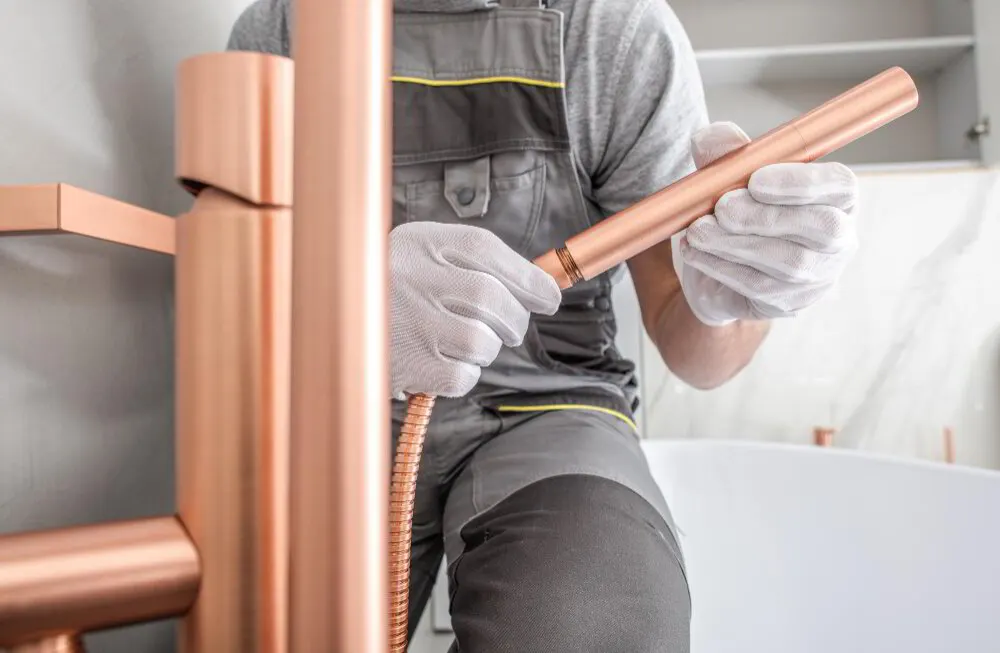
Copper has carried drinking water through Ohio homes for generations, and a lot of it is still doing the job. When a joint starts weeping, a line develops pinhole leaks, or you need new copper run for an addition or a remodel, K & K Plumbing handles the work from our shop in East Canton for properties throughout Stark County, Summit County and the surrounding area.
Copper work falls into three broad buckets: fixing what is there, replacing what has worn out, and installing new lines. Most service calls start with a single problem, such as a drip from a soldered fitting above a basement ceiling, but a good repair always includes a look at the pipe on either side of the failure. If the surrounding copper is thin, scaled or discolored, patching one spot just moves the leak a few feet down the line.
We cut out damaged sections and replace them with new pipe and fittings, rebuild failed joints, replace corroded shutoff and stop valves, and re-pipe the supply connections at water heaters, boilers and well pressure tanks. On the installation side we run new copper mains and branch lines for additions, finished basements, kitchens and baths, and we bring new service lines into the house when an old one fails.
Copper rarely fails all at once. It gives hints, and catching them early is the difference between a quick section replacement and a ceiling, drywall and flooring repair. Walk your basement or crawlspace with a flashlight a couple of times a year and look closely at exposed lines, especially near elbows, tees and soldered joints.
Blue or green staining on fixtures and around fittings usually points to corrosion, often from water chemistry. A crusty white or green buildup at a joint means that joint has been seeping for a while. Pipes that feel rough or pitted, a water bill that creeps up with no change in use, or a meter that moves when every tap is shut off are all reasons to call. So is a sudden drop in pressure on one fixture or a whole floor.
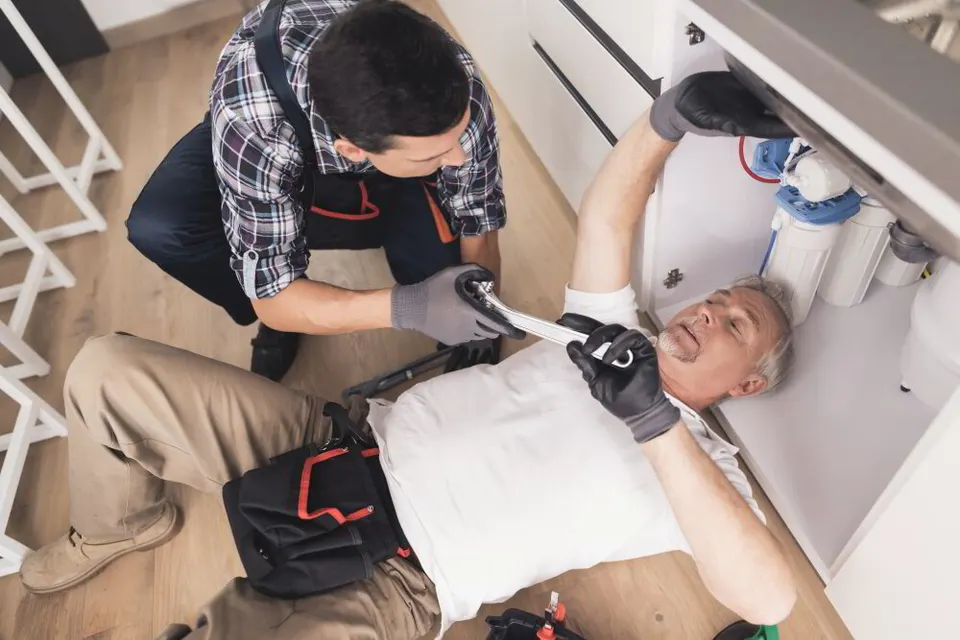
In houses, copper work tends to be about reliability and keeping disruption low. Homeowners want the leak stopped, the water back on and the basement left clean. We plan cuts so access holes are as small as practical, protect floors and finishes, and talk through whether a repair or a larger replacement makes more sense for how long you plan to stay in the home. Rental owners often want the same thing on a tighter schedule between tenants.
Commercial properties bring larger pipe sizes, longer runs, more fixtures on a single branch and tenants who cannot simply be without water for the day. Restaurants, offices, shops, churches and small industrial spaces often rely on copper for its strength and heat tolerance. For these jobs we coordinate shutdowns with the property manager, isolate sections where valves allow, and stage work so the building can keep operating as much as possible.
Every job follows the same three steps. First, you reach out for a free estimate and we come look at the problem in person. We trace the leak or the planned route, check the condition of the surrounding pipe, and note anything that affects the work, like a valve that will not close or a line buried in a finished wall.
Second, we lay out the specifications: what will be replaced, what pipe type and fittings we will use, where new valves go, and how long the water will be off. You approve that scope before any cutting happens. Third, we do the work, pressure-test the repaired or new lines, check every joint for leaks with the water back on, and inspect the finished job before we pack up. If something in the wall turns out to be worse than it looked, we stop and talk with you before changing the plan.
Not all copper is the same. Type K has the thickest wall and is used mainly for buried service lines. Type L is a middle weight that holds up well inside homes and commercial buildings. Type M is the thinnest and was widely used in residential interiors. The printed stripe on the pipe tells you which you have: green for K, blue for L and red for M. When we replace a section, we usually recommend Type L for interior lines because the extra wall thickness adds margin against erosion and corrosion.
Joints can be soldered with lead-free solder or made with press fittings, which are crimped with a powered tool and need no open flame. Press fittings are useful near wood framing, insulation or finished surfaces where heat is a concern. Where copper meets galvanized steel, a dielectric fitting keeps the two metals from corroding each other. In some cases, especially long runs through finished walls or areas prone to freezing, PEX tubing is a sensible alternative, and many homes end up with a mix of both. If most of the house is failing, a full whole-home repipe may be the better investment.
Before we arrive, find your main shutoff and make sure it turns. Clear a path to the water heater, the main and any area where we will be working, and move stored items away from basement walls under the leak. If water is actively spraying, shut off the main, open a low faucet to drain pressure, and keep electrical devices away from wet areas. We also offer emergency leak containment and can help with documentation if you are working with your insurance company.
Day-to-day care is simple. Insulate copper in unheated spaces before winter, since a frozen copper line can split along its length. Keep household water pressure in a normal range, because high pressure and high velocity both wear on pipe walls and elbows. If you are on a private well, have the water tested, as acidic water is one of the most common causes of pinhole leaks. Homeowners who want someone checking these things every year can look at our plumbing maintenance agreement, which includes an annual inspection and priority service.
Our shop sits in East Canton in Osnaburg Township, which puts Canton, Louisville, North Canton, Massillon and Alliance within a short drive. We regularly work across Stark and Summit Counties, from Navarre and Brewster in the south to Hudson, Stow and Twinsburg to the north, and we also serve parts of Portage, Carroll, Columbiana, Mahoning and Tuscarawas Counties. Our certified, licensed, insured and bonded plumbers bring over 15 years of local experience to every copper job, along with the habit of leaving your home or building as clean as we found it. Leaks that have already caused damage can also be handled through our leak repair service.
Local pages for the communities we serve most often.
Integrity is the cornerstone of K & K Plumbing. We keep our promises, and these are the commitments we make on every job:

To stay on top of your project from start to finish, ensuring complete satisfaction.

To set and meet all deadlines for the duration of the entire project.

To protect and prepare your home before and during all work.

To protect and prepare your home after every plumbing project.

To accurately price your job so your project is free from hidden costs.
 Estimate
Reach out and we respond promptly. We listen to what you need, assess your plumbing, and walk you through your options so the estimate is accurate and fair.
 Specifications
Every job is planned around your home’s layout and condition, your goals and your budget. Nothing starts until you’ve approved the plan.
 Work + inspection
Our plumbers work efficiently and carefully, then inspect the finished job so you get a reliable, durable result.
Well-installed copper often lasts many decades, but water chemistry, pressure and the pipe type all matter. Thin Type M pipe on a private well with acidic water can fail much sooner than heavier pipe on treated municipal water.
The usual culprits are aggressive or low-pH water, high water velocity that erodes the inside of elbows, and sediment or debris that pits the pipe wall. Finding the cause matters, because repairing one pinhole without addressing it often leads to more.
One isolated leak on otherwise healthy pipe is usually a straightforward repair. Several leaks in a year, widespread green corrosion, or pipe walls that look thin when we cut out a section are signs that replacing the run, or repiping, will cost less over time.
Both are solid choices. Copper handles heat well, resists UV, and works well for exposed runs and appliance connections. PEX installs faster through finished walls and tolerates freezing better. We often recommend a combination based on where the lines run.
Yes. We repair and install copper supply lines in offices, shops, restaurants and other commercial spaces, and we plan water shutdowns around your business hours as much as the job allows.
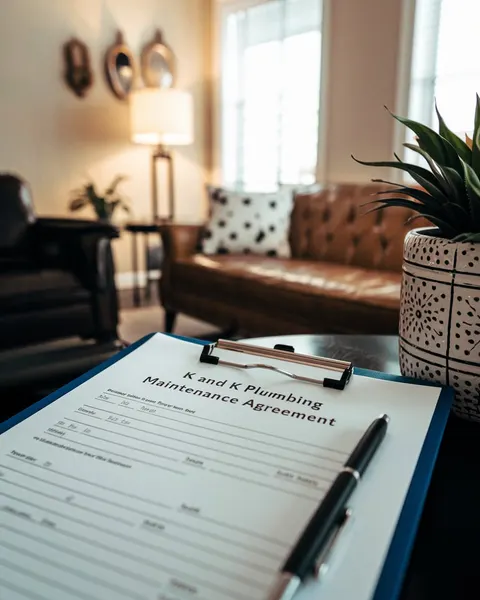
An affordable way to keep your plumbing in top shape, cut down on surprise repairs and extend the life of your equipment.
When it comes to maintaining your property, few systems are as critical—or as overlooked—as your plumbing. Whether you're a homeowner protecting your…
When it comes to your home's plumbing system, the materials you choose can significantly impact performance, longevity, and overall value. The network of…
Leaky pipes are among the most common plumbing issues homeowners face, and addressing them promptly is crucial for protecting your property and…
Tell us what's going on and we'll get back to you to schedule a time. Free estimates and consultations.
Need help right now? Call 330-875-8003

We prioritize your satisfaction by delivering quality plumbing solutions tailored to your needs, carried out with precision, professionalism and dedication to excellence.
Start Your Free Quote Call 330-875-8003